Public Distribution Of Job Appointment Letters: Hope Or Hype? - A Comprehensive Analysis
Kranthi Vegesna - FEB 14, 2026
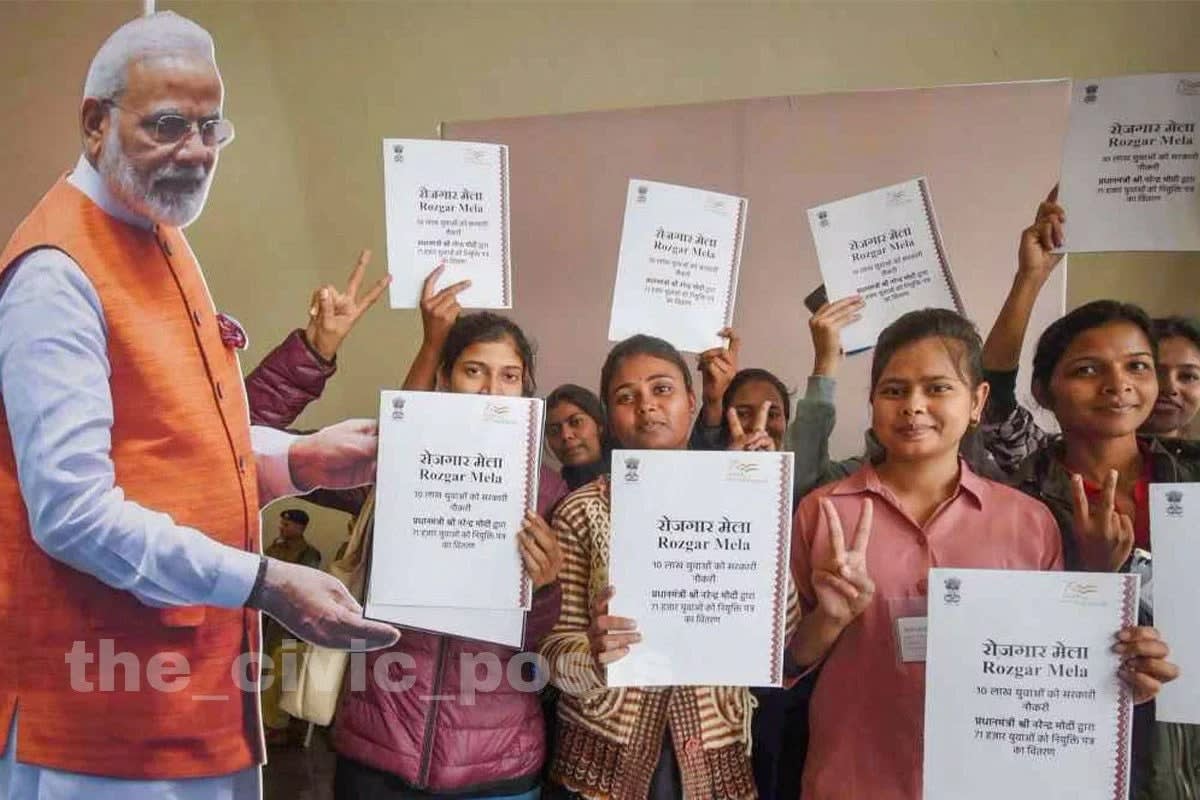
In India, the practice of distributing government job appointment letters through public events was initiated by Prime Minister Narendra Modi on October 22, 2022, under the banner of the “Rozgar Mela.” The stated objectives were to fill long-pending vacancies in government departments in mission mode and to enhance transparency in the recruitment process. In the very first phase, nearly 75,000 candidates received appointment letters directly from the Prime Minister, sparking nationwide discussion.
While the initiative initially appeared promising, over time it has raised several critical questions. Most notably: Is there a real administrative need to distribute appointment letters through large public gatherings? Or has the process gradually turned into a political spectacle rather than a genuine benefit for candidates?
Factors That Inspire Hope
For millions of young Indians, securing a government job is a lifelong dream. The moment an appointment letter is received is often unforgettable. Some argue that celebrating this milestone publicly enhances social recognition for candidates and their families. Moreover, distributing appointment letters to large groups on a single platform sends a strong signal that the government is serious about employment generation.
From a transparency standpoint, supporters claim that such events reassure the public that recruitment processes are being completed and that jobs are genuinely being filled. In the past, recruitment delays, legal disputes, and procedural bottlenecks led to widespread frustration among aspirants. Seen in this light, the Rozgar Mela is viewed by some as an attempt to rebuild trust.
The Burden on Candidates
However, the ground reality of these public events often places an additional burden on candidates. For instance, in Telangana, teacher recruits were asked to travel from across the state to Hyderabad. Even with special transport arrangements, bringing thousands of candidates to a single venue on the same day involves logistical challenges.
Travel fatigue, food expenses, missed workdays, and mental stress add to the cost borne by candidates. While the joy of securing a job remains intact, many question whether such large-scale events are truly necessary when appointment orders could just as easily be issued at district offices or through digital platforms.
Sensitive Issues and Irresponsible Display
A more troubling concern relates to how sensitive social and religious matters are handled during these public events. Recently in Patna, reports emerged that during the distribution of an appointment letter to a Muslim woman, there was an attempt to make her remove her hijab. Such incidents are deeply objectionable.
Issuing an appointment letter is an administrative act. Interfering with a candidate’s religious practices or personal dignity goes against constitutional values. Episodes like these not only erode public trust but also create a sense of humiliation among specific communities.
Statements That Risk Social Division
Another controversy arose in Andhra Pradesh when remarks made during a police constable appointment event linked a candidate’s selection to SC sub-categorization. Publicly attributing an individual’s success to caste-based classification risks inflaming existing tensions, particularly between communities such as Mala and Madiga.
The merits and demerits of SC categorization deserve a broader, separate debate. Introducing such sensitive discussions on a job appointment platform is questionable. It diminishes the individual’s hard work and talent while potentially fueling resentment among other groups.
Recruitment Events Turning Political
Critics increasingly argue that appointment letter distribution events are drifting toward political platforms. Praising government policies, making indirect attacks on political opponents, and claiming credit for employment generation among specific social groups have become common features.
While a government job is not a constitutional right, it is meant to be offered under the principle of equal opportunity. Politicizing this process risks dragging newly appointed candidates into unnecessary political narratives.
Are There Better Alternatives?
This situation raises important questions:
Can appointment letters be issued at the district level or entirely through digital systems?
If public events are unavoidable, can they be kept strictly administrative, free from political commentary?
Can clear guidelines be issued to avoid religious or caste-related controversies?
Conclusion
Programs like the Rozgar Mela are well-intentioned in spirit. Demonstrating governmental commitment to employment generation is not inherently wrong. However, the method of implementation must not burden candidates, create new social divisions, or undermine constitutional values.
A job appointment letter marks a pivotal moment in a young person’s life. That moment deserves to be dignified, calm, and free from political overtones. Self-respect matters more than spectacle. The sooner governments recognize this, the better it will be—for candidates, for society, and for democracy.