The Great IndiGo Fiasco: Behind the Scenes of India’s Biggest Flight Meltdown
Kranthi Vegesna - FEB 16, 2026
How regulation, scale, and human limits collided in India’s aviation system
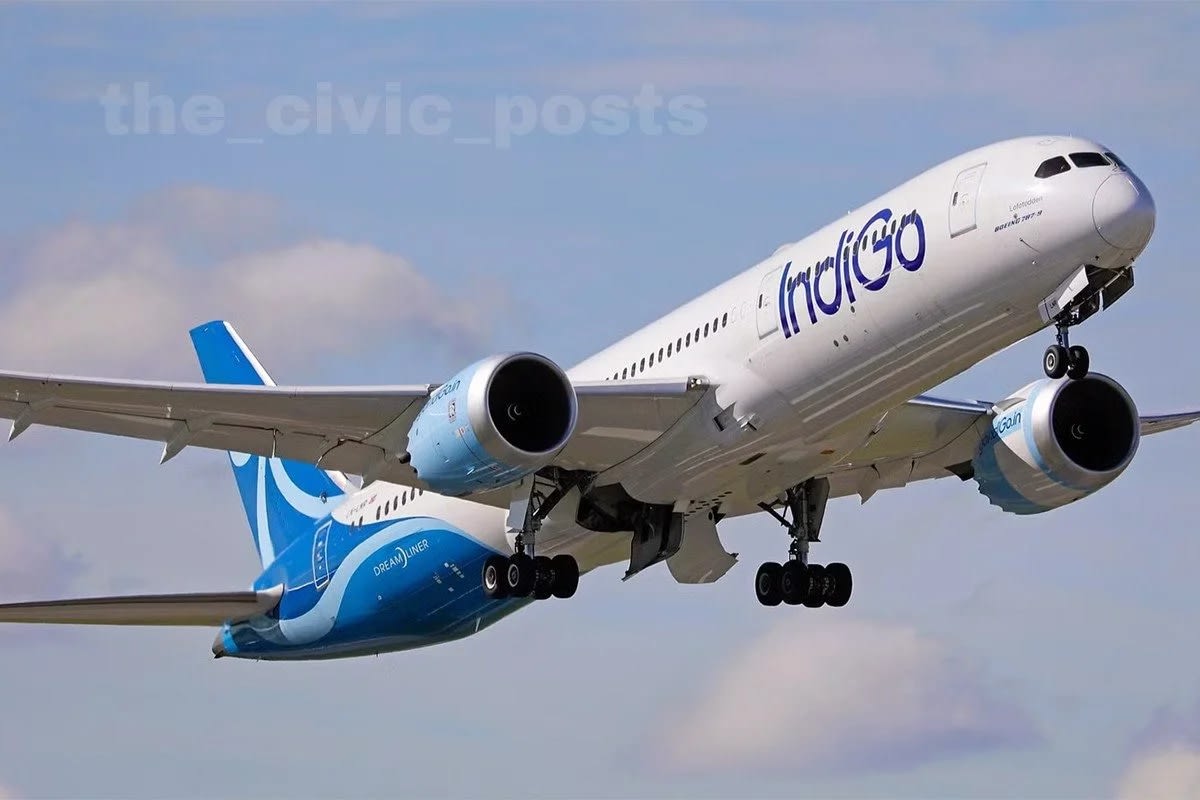
In the first week of December 2025, India experienced one of its most disruptive aviation episodes in recent years, testing the resilience of a sector often celebrated for its efficiency and growth. Between December 2 and December 8, IndiGo—India’s largest airline—cancelled an estimated 4,800 to 5,200 flights nationwide, according to airport movement data and industry disclosures. At the peak of the disruption, nearly one in three scheduled IndiGo flights was delayed or cancelled, leading to overcrowding and prolonged uncertainty at major terminals such as Delhi and Mumbai. Industry analysts estimate that between 550,000 and 650,000 passengers were directly affected through cancellations, missed connections, or extended delays. With alternative fares surging during the peak wedding and holiday season, customer losses—from emergency rebookings, forfeited hotel stays, and onward travel disruptions—are conservatively estimated at ₹700–₹1,000 crore, underscoring how quickly operational stress translated into nationwide passenger hardship.
The Policy Trigger: Safety Meets Operational Reality
The immediate regulatory trigger was the full enforcement of revised Flight Duty Time Limitations (FDTL) by the Directorate General of Civil Aviation (DGCA). These rules, notified in 2024 after prolonged consultation, were designed to address pilot fatigue and align India with international safety standards set by the International Civil Aviation Organization. Key provisions included increasing mandatory weekly rest for pilots from 36 to 48 hours and reducing permissible night landings. Airlines were granted an 18-month transition period, with Phase II implementation taking effect on November 1, 2025. The policy itself was neither sudden nor unexpected, but its full enforcement coincided with seasonal fog, peak travel demand, and already tight crew availability—leaving minimal margin for error for carriers operating highly optimized schedules.
A Market Leader Under Strain—and the Human Cost of Hyper-Efficiency
IndiGo entered this period as the undisputed leader of India’s domestic aviation market, controlling roughly 65 percent of capacity. Its low-cost operating model—built around a largely single-type fleet, rapid aircraft turnarounds, and high aircraft utilization—has delivered sustained profitability and industry-leading punctuality during stable conditions. However, signs of strain were visible well before December 2025. Passenger feedback over the preceding year showed a steady rise in complaints related to staff responsiveness and rigid handling of disruptions, trends that industry observers and former employees have linked to intense productivity targets, lean staffing, and limited frontline discretion. The December disruption revealed how operational rigidity and human fatigue reinforced each other: a system optimized for efficiency struggled to absorb shock, both mechanically and emotionally.
How IndiGo Compared to Its Rivals—and Why Others Avoided Collapse
A comparison with IndiGo’s closest competitors helps explain why the disruption did not escalate into a sector-wide breakdown. The Air India–Vistara combine, under the Tata Group, operates with lower aircraft utilization but deeper crew reserves and more flexible duty structures, allowing it to absorb regulatory transitions with reduced schedule stress. Akasa Air, though much smaller, benefited from limited scale and lower night-flight density, enabling faster roster adjustments. IndiGo occupied the most exposed position—massive scale combined with minimal buffers—where localized crew shortages cascaded rapidly across the network. Its superior profitability, achieved through compressed turnaround times and tight crew margins, left little recovery capacity once multiple constraints converged.
Planning Gaps, Policy Enforcement, and Missed Warning Signals
The revised FDTL norms were publicly debated, phased, and known well in advance. Other airlines treated the transition as a structural shift, adjusting hiring plans and accepting short-term inefficiencies. IndiGo appears to have assumed that execution discipline and scale could offset the tighter rules without materially altering its operating philosophy. In retrospect, earlier customer-service stress indicators—rising complaints, rigid frontline responses, and reports of employee burnout—functioned as warning signals of limited elasticity. From the regulator’s perspective, further delay would have weakened safety enforcement; from the airline’s standpoint, the assumption that buffers could be improvised proved overly optimistic once peak demand arrived.
Broader Implications and Lessons
The December episode carried reputational implications for India’s aviation ambitions, requiring emergency measures such as fare monitoring and additional rail capacity to stabilize national travel. For policymakers, the lesson is that safety enforcement must be paired with stress-testing of systemically important operators in concentrated markets. For corporations, especially market leaders, the takeaway is equally clear: operational excellence must be matched with resilience built into people, processes, and planning. IndiGo will recover operationally, but how it recalibrates its human and organizational buffers may determine whether future turbulence remains manageable—or once again spills into public disruption.