Viral Hate – Silent Politics – People Who Stand for Love: Which Direction Is Digital India Heading?
jhhj
Kranthi Vegesna - MAR 3, 2026

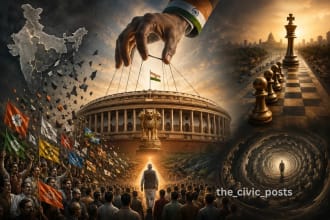
In the digital age, words have become weapons. Backed by the freedom of speech guaranteed by the Indian Constitution, thousands of creators produce content daily on platforms like YouTube, Instagram, and Facebook. While many use this freedom responsibly, others have turned hate into a business model.
Videos promoting love, unity, and harmony often receive limited engagement. In contrast, reels that provoke religious or caste-based hostility garner millions of views, comments, and likes. Is this merely a social media trend? Or is it a reflection of a society becoming increasingly polarized?
---
Freedom of Expression – And Its Limits
India is a secular democracy. Article 19(1)(a) of the Constitution guarantees every citizen the right to freedom of speech and expression. However, Article 19(2) allows the state to impose reasonable restrictions in the interest of public order, morality, national security, and communal harmony.
Freedom, therefore, is not absolute. Content that insults communities, incites religious hatred, or deepens social divisions does not fall under constitutional protection. Yet with the rapid expansion of digital platforms, hateful content often spreads faster than laws can regulate it.
---
“Hate Sells” – The Reality of the Digital Economy
Social media algorithms reward engagement. Content that generates more comments, shares, and reactions reaches wider audiences. Hate-driven content often triggers strong emotions-anger, fear, resentment-which naturally attract attention. As a result, divisive content tends to go viral faster than messages of peace.
Some content creators have recognized this pattern and monetized it. More views mean more advertising revenue. There are also allegations that organized networks and political interests invest heavily in digital propaganda to influence narratives. Whether fully proven or not, the perception itself reflects a troubling digital reality.
---
Expansion of Hate – From One Community to Another
In recent years, hate campaigns targeting the Muslim community have grown noticeably. Subsequently, similar narratives have surfaced against Christian communities as well. Minor incidents are amplified, misinformation is circulated, and entire groups are portrayed as anti-national.
This is not merely a religious issue. When a community is constantly depicted with suspicion, it affects livelihoods, security, and social dignity. The most vulnerable-daily wage workers, small traders, and marginalized families-often bear the brunt of such hostility.
---
The Silence of Leadership – Questions in a Democracy
Amid rising concerns over hate speech, the perceived silence of key political leaders has sparked debate. Words from leaders-whether at the highest office or local levels-carry immense influence. A clear condemnation of hate can send a powerful message to society.
Silence, however, can sometimes be interpreted as tacit approval. In a democracy, leadership is not only about governance but also about upholding values and moral direction.
---
The Uttarakhand Incident – A Moment When Love Won
A recent incident in Uttarakhand involving Deepak Kumar and Vali from Kurnool district became a national talking point. Despite hateful reactions online, thousands of citizens came forward to express solidarity and support, emphasizing love and humanity over division.
The episode sent a clear message: those who believe in love and coexistence far outnumber those who promote hatred. Social media, while capable of spreading division, can equally serve as a platform for compassion and unity.
---
The Cost of Hate Politics
There are claims that crores of rupees are spent on organized digital propaganda-through IT cells, trolling networks, and misinformation portals. Critics argue that such ecosystems contribute to social fragmentation.
The long-term consequences can be serious. Social instability affects economic growth and investor confidence. Rising communal tensions can damage the nation’s global reputation.
---
Love – The True Spirit of India
India is a civilization built on diversity-of faiths, languages, and cultures. For centuries, unity in diversity has been its strength. While some attempt to inflame divisions, a larger segment of society continues to believe in coexistence, tolerance, and mutual respect.
History shows that in times of crisis-natural disasters, pandemics, humanitarian emergencies-religious and social differences fade, and people stand together. That is the true face of India.
The Way Forward
Digital literacy: Citizens must be equipped to identify misinformation and resist emotional manipulation.
Stronger legal enforcement: Hate speech laws must be implemented consistently and transparently.
Clear political stance: Leaders should openly and unequivocally condemn divisive rhetoric.
Promotion of positive content: Creators who spread messages of harmony should be encouraged and amplified.
Civil society engagement: Religious leaders, intellectuals, and educators must actively foster dialogue and unity.
Hate spreads quickly; love grows slowly. But love endures.
Freedom of speech strengthens democracy only when exercised responsibly. While some may attempt to profit from division, others continue to build movements rooted in compassion and solidarity.
In the short term, hate may go viral. In the long run, history remembers those who stood for humanity.
India remains a nation of shared destinies. As long as there are people who amplify love ten times stronger than hate, the democratic heart of this country will continue to beat strong.