Women’s Reservation Bill: From Historic Passage to Controversial Implementation
Kranthi Vegesna - FEB 19, 2026
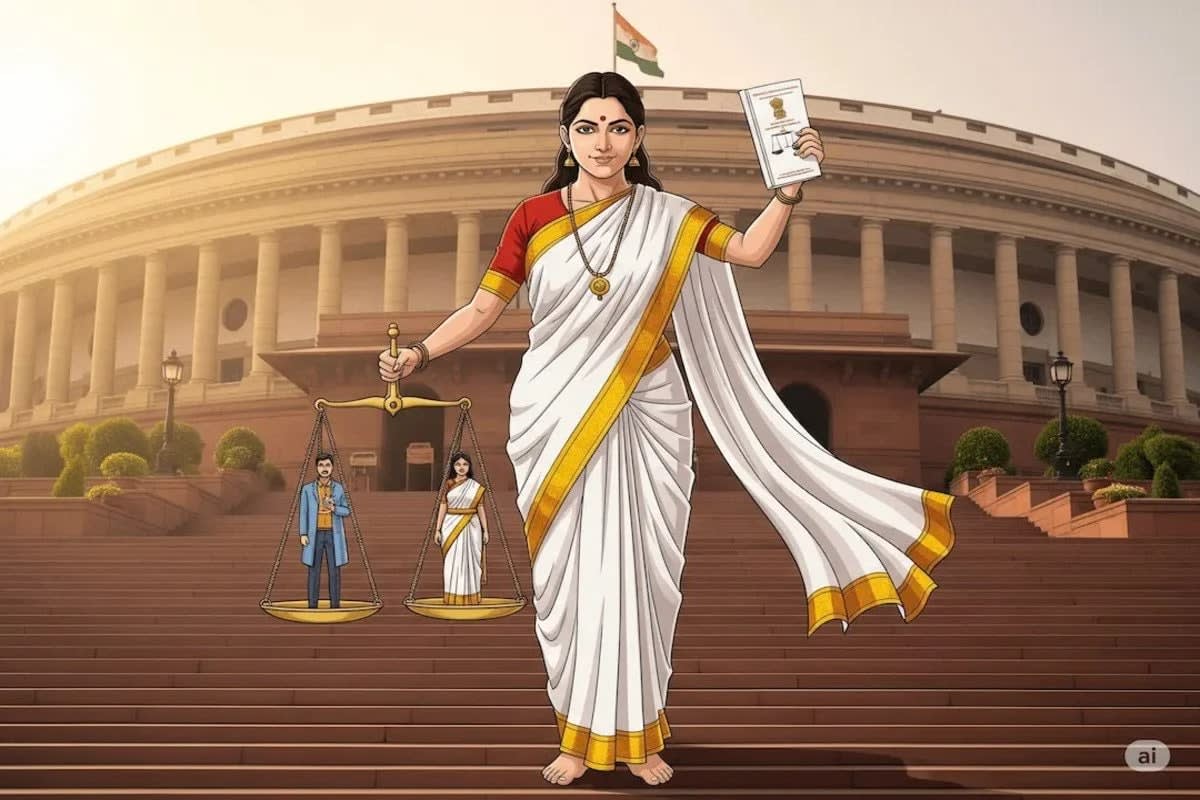
In India’s legislative history, two types of bills stand apart as case studies: one, passed but not implemented—the Women’s Reservation Bill; the other, passed and later repealed—the Farm Bills. Together, they illustrate how politics, timing, and public sentiment shape the fate of major reforms.
The Women’s Reservation Bill, formally known as the Nari Shakti Vandan Adhiniyam (106th Constitutional Amendment Act), was passed in 2023 with the promise of reserving 33% of seats for women in the Lok Sabha, Rajya Sabha, and state assemblies. While hailed as a milestone for gender equality and political representation, its decades-long journey, combined with delays in implementation, has sparked criticism and raised doubts about its true intent.
---
Historical Background: The Origins of the Idea
Debates over women’s representation in politics date back to the Constituent Assembly (1946–1950). While leaders like Sarojini Naidu strongly advocated for women’s empowerment, the Constitution, though embedding equality (Articles 14 and 15), made no specific recommendation for parliamentary seat reservations.
The demand resurfaced in 1974 when the Committee on the Status of Women in India (CSWI) recommended parliamentary and assembly reservations for women, laying the groundwork for future debates.
In 1992, the 73rd and 74th Constitutional Amendments provided 33% reservation for women in panchayats and municipalities, proving a game-changer in grassroots politics and setting a strong precedent for parliamentary-level quotas.
Failed Attempts: 1996–2014
The first legislative attempt came in 1996 under the HD Deve Gowda government with the 81st Amendment Bill. Despite proposing 33% reservation, it collapsed due to demands for sub-quotas for OBC women and lack of consensus.
Subsequent attempts in 1998 and 1999 under Atal Bihari Vajpayee’s NDA government also failed amid opposition from the Samajwadi Party and concerns about representation for OBC and Muslim women.
In 2008, the Manmohan Singh-led UPA government introduced the 108th Amendment Bill in the Rajya Sabha. It achieved a landmark in 2010, when the Upper House passed it 186–1. Yet, fierce opposition from leaders like Mulayam Singh Yadav, combined with its non-introduction in the Lok Sabha, meant the bill lapsed in 2014 with the dissolution of the 15th Lok Sabha. In total, six attempts had failed.
---
2023: A Historic Breakthrough
After nearly three decades of debate, the Narendra Modi-led NDA government tabled the Women’s Reservation Bill again on September 19, 2023, during a special session in the newly inaugurated Parliament building. Law Minister Arjun Ram Meghwal presented the bill, and it was passed with overwhelming support—454 votes in favor in the Lok Sabha (only two opposed) and unanimous approval by 214 members in the Rajya Sabha.
On September 28, President Droupadi Murmu gave her assent, and the law was notified. The bill provides for 33% reservation in legislatures until 2040, with sub-quotas for SC/ST women, though notably not for OBC women—a point of contention.
Delays and Criticism
Despite the historic passage, the government announced that implementation would not occur until 2029. The reason: it hinges on the completion of the 2021 Census (still pending) and subsequent delimitation of constituencies. Home Minister Amit Shah stated in Parliament that delimitation would only occur after the 2026 elections, making implementation possible only thereafter.
This timeline has drawn sharp criticism from opposition parties (Congress, AAP, TMC), which have branded it “vote bank politics.” They argue that while the bill was projected as a historic reform ahead of the 2024 general election, its benefits will not materialize until five years later. Some have even likened it to an “election gimmick,” comparing it to the swift passage and later repeal of the Farm Bills.
The government, however, defends the delay as constitutionally necessary, calling the bill “historic empowerment.” Yet, its reluctance to expedite the census has fueled further suspicion.
---
Comparing with the Farm Bills
The contrast with the Farm Bills (2020) is striking. Passed hastily in September 2020 without broad consultation, they sought to liberalize agricultural trade and contracts. Farmers’ unions, however, feared the reforms would weaken the Minimum Support Price (MSP) system and empower corporate entities at their expense.
The ensuing protests, centered on Delhi’s borders for over 13 months, claimed more than 700 farmer lives. Bowing to pressure, the government repealed the laws in November 2021.
While the Farm Bills were passed swiftly and repealed under public pressure, the Women’s Reservation Bill was passed swiftly but faces indefinite delays in implementation. Both cases highlight rushed decision-making, lack of public consultation, and political maneuvering.
---
The Road Ahead
The Women’s Reservation Bill, passed after 27 years of debate and six failed attempts, has the potential to reshape India’s political landscape by significantly boosting women’s representation. Yet, with its implementation deferred until 2029 and linked to delayed census and delimitation processes, public trust risks erosion.
Without swift execution, the bill may become, like the Farm Bills, a symbol of political expediency rather than genuine reform. The coming years will determine whether it transforms India’s gender equation in politics—or remains a promise suspended in time.