Zohran Mamdani: The Immigrant Lawmaker Redefining New York Politics
AKI - MAR 4, 2026
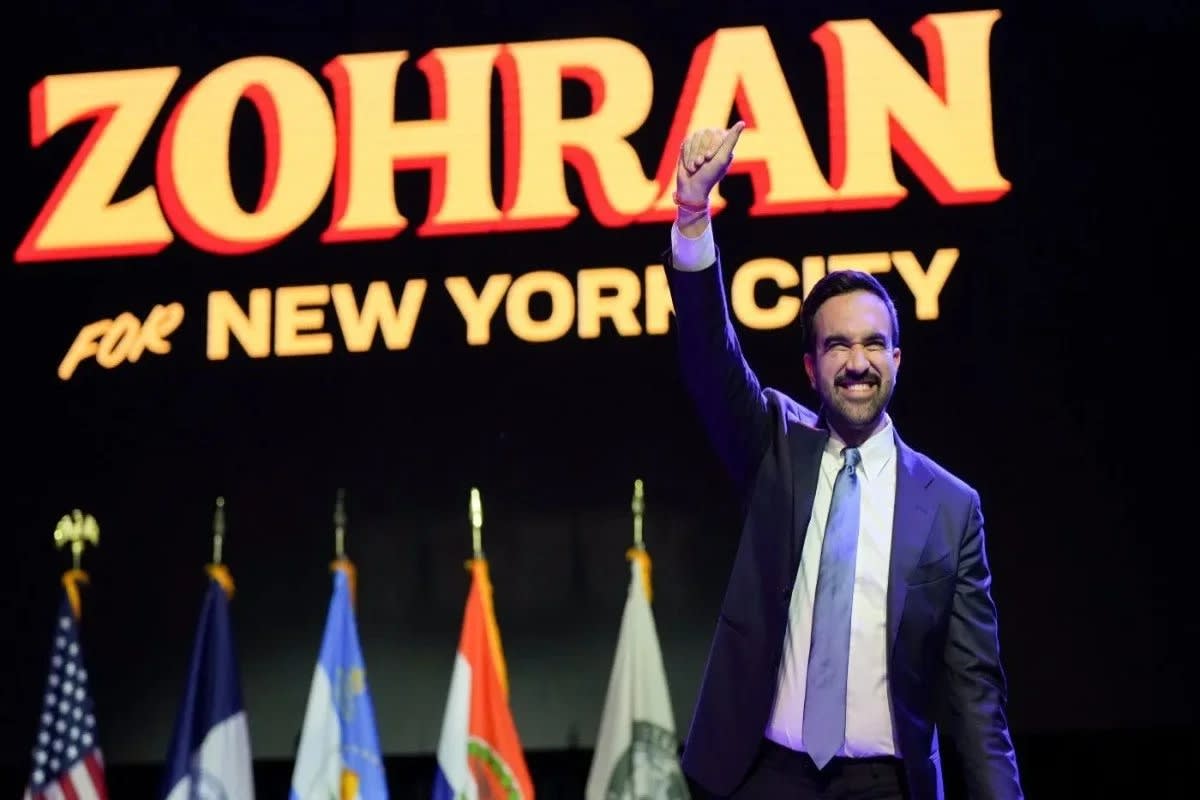
The political rise of Zohran Mamdani, one of the most prominent young lawmakers in New York, reflects a broader transformation in American public life.
His success symbolizes a generational shift - progressive, immigrant-rooted, and community-driven - that challenges long-standing political norms. At just 34, Mamdani represents Astoria, Queens, in the New York State Assembly, where he became one of the first South Asian-American and Muslim legislators in the state’s history.
His growing influence signals an undeniable rise in the political participation and visibility of the Indian diaspora in the United States. His ascent, alongside figures such as Cincinnati Mayor Aftab Pureval and Virginia Lieutenant Governor Ghazala Hashmi, underscores how Indian-origin leaders are shaping the evolving American political narrative.
The Rising Tide of Indian-Origin Politicians
Mamdani’s journey is part of a larger trend of Indian-American leaders gaining political prominence. The most recognized figure is Vice President Kamala Harris, who broke multiple barriers as the first woman, first Black, and first Indian-American to hold the office. In Congress, leaders like Ami Bera, Raja Krishnamoorthi, Ro Khanna, and Pramila Jayapal represent a cohesive and influential bloc shaping U.S. policy discussions.
Even across party lines - from Nikki Haley to Vivek Ramaswamy - Indian-origin politicians have diversified the American political landscape, moving beyond traditional professional domains like technology and medicine into policymaking and public leadership. This evolution marks a deeper integration of immigrant communities into the core of American governance.
Roots of a Progressive Movement
Mamdani’s rise stems from his strong grassroots activism and his advocacy for economic equity. Elected to the New York State Assembly in 2020 as a Democratic Socialist, he has championed policies centered on housing affordability, workers’ rights, and public transport accessibility.
His proposals - including fare-free public buses, rent freezes on stabilized apartments, and a higher minimum wage - have resonated with young, working-class, and immigrant voters. While his ideas attract both admiration and criticism, Mamdani’s appeal lies in his authenticity and community connection, proving that a principled, locally grounded message can inspire even in the face of entrenched political power.
A Legacy of Global Intellect and Art
Born in Kampala, Uganda, in 1991, Zohran Mamdani embodies a unique cultural synthesis shaped by intellect and art. His father, Mahmood Mamdani, is a renowned Ugandan-American scholar and Columbia University professor known for his work on African and postcolonial studies. His mother, acclaimed filmmaker Mira Nair, has brought South Asian stories to global audiences through classics like Salaam Bombay! and Monsoon Wedding. This rich lineage of activism and creativity influenced Zohran’s worldview and his commitment to social justice. Moving to New York at age seven, he grew up witnessing the challenges and vibrancy of immigrant life, experiences that would later define his political voice.
A Controversial Voice on Foreign Policy
One of the more debated aspects of Mamdani’s political identity is his stance on Middle East policy, particularly his advocacy for Palestinian rights. His involvement in student activism at Bowdoin College and later public statements have drawn both support and criticism. Detractors label him as overly critical of Israel, while supporters view him as a principled advocate for human rights and equality. Despite controversy, his consistency on this issue underscores the generational and ideological shifts reshaping American progressivism - where younger leaders often challenge traditional foreign policy alignments in favor of moral and humanitarian framing.
A New Era for Immigrant Representation
Mamdani’s growing prominence represents more than personal success - it’s emblematic of a larger story of representation and belonging. For immigrants, Muslims, and South Asians in America, his rise signals a new kind of political inclusivity. His policy focus on housing, healthcare, and transportation reflects issues directly impacting working-class and immigrant communities, reaffirming the ideal that New York - and by extension, America - remains a place where diversity and determination can shape leadership. His presence in the Assembly adds a vital perspective to a democracy enriched by the voices of those once on its margins.