Emotion Beyond Words: Sonali Bendre Shares the Reality of a Challenging Character
Editorial desk - JUN 20, 2026
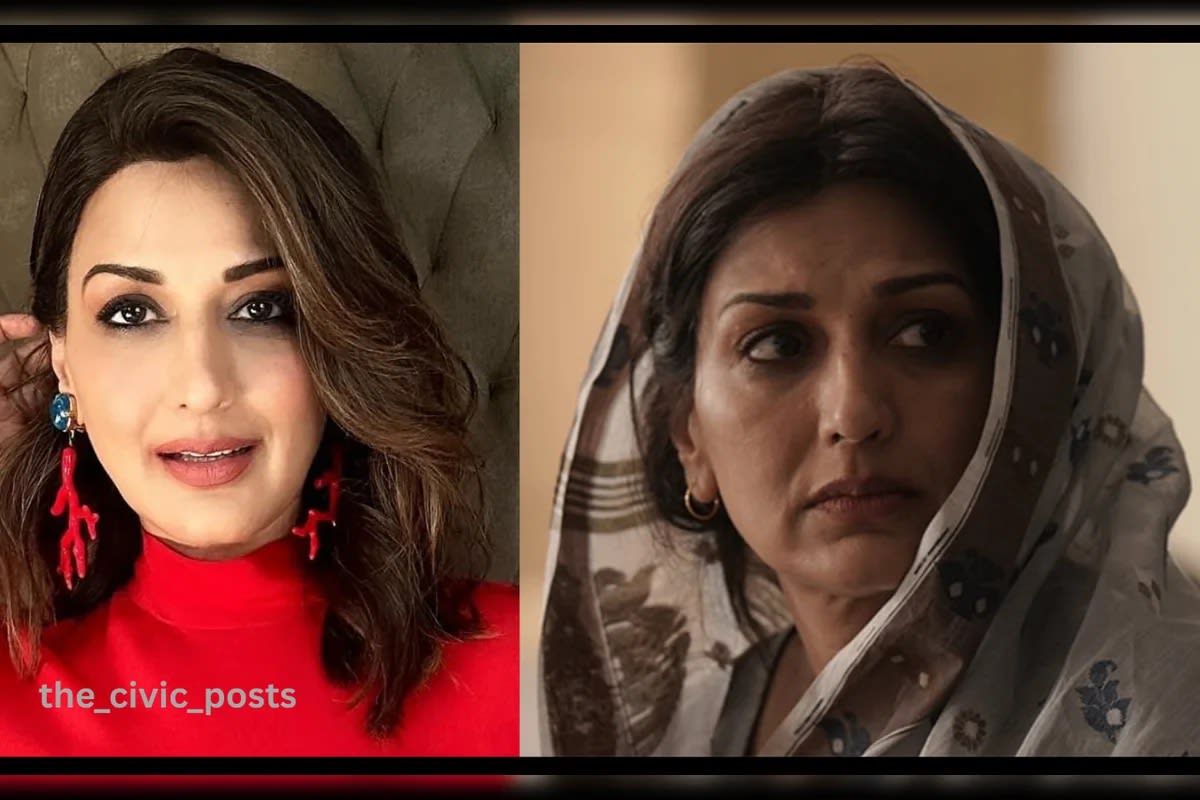
Acting is often seen as a profession built on expressions, dialogues, and the ability to transform into different characters. While audiences usually focus on what appears on screen, they rarely witness the emotional journey actors undertake behind the scenes. Every role requires a certain degree of preparation, imagination, and dedication. However, some characters demand much more than technical skill. They require actors to immerse themselves so deeply into a particular emotional state that the experience stays with them long after filming ends. Veteran actress Sonali Bendre recently opened up about one such experience, describing how a silent and emotionally layered role became one of the most challenging assignments of her career.
For decades, Sonali has been recognized for her elegance, versatility, and ability to connect with audiences through natural performances. Throughout her journey in the entertainment industry, she has portrayed a variety of characters, each bringing its own set of demands. Yet, despite years of experience in front of the camera, certain roles continue to present unexpected challenges. The character she recently portrayed required her to communicate emotions without relying heavily on spoken dialogue, forcing her to depend almost entirely on expressions and internal emotional strength.
In conventional storytelling, dialogue serves as a bridge between the character and the audience. Through words, viewers understand motivations, emotions, fears, and desires. Dialogue often explains what a character is thinking and helps move the narrative forward. When that tool is removed, the responsibility falls entirely on the actor’s ability to communicate through silence. Every glance, gesture, pause, and expression gains significance. The actor must ensure that audiences understand the emotional journey without hearing it spoken aloud.
This form of acting is often far more difficult than dialogue-heavy performances. Delivering lines can provide a structure for emotional expression, but silent performances leave no room for verbal support. The performer must convey every emotion through subtle visual cues. It requires extraordinary awareness because even the smallest facial movement can change how a scene is interpreted.
For Sonali, preparing for such a role meant diving deeply into the emotional world of the character. Instead of speaking emotions, she had to experience them internally. This process demanded intense concentration and emotional commitment. The character’s thoughts, fears, and struggles had to become real enough for them to naturally emerge through her performance.
One of the reasons silent roles are so demanding is that they require actors to feel emotions rather than simply portray them. The audience can often detect when a performance lacks authenticity. To avoid this, actors spend time understanding the psychology of their characters. They explore personal histories, motivations, and emotional wounds. This preparation helps create reactions that feel genuine rather than rehearsed.
In emotionally complex stories, this level of immersion can become overwhelming. When actors repeatedly revisit difficult emotions during filming, those feelings can begin to influence their own emotional state. A character’s sadness, anxiety, loneliness, or fear may linger long after a scene is completed. While actors understand that these emotions belong to the character, experiencing them repeatedly can still leave a lasting impression.
Sonali’s reflections highlight this reality. She described how the emotional atmosphere of the role remained with her even after filming had ended for the day. The character’s presence seemed difficult to leave behind, creating an experience that extended beyond the boundaries of the set. This phenomenon is not uncommon among performers who take on emotionally intense roles. Many actors have spoken about the challenge of separating themselves from characters who occupy a significant amount of emotional space.
The reason this happens is simple. Great acting often involves empathy. Actors must understand and experience the emotions of another person, even if that person exists only within a fictional narrative. The deeper the connection, the more authentic the performance becomes. However, that same connection can make it difficult to immediately return to everyday life once filming concludes.
Silent performances intensify this challenge because emotions remain internalized. In dialogue-driven scenes, characters can release emotions through speech. They can express anger, explain pain, or share fears through words. In a silent performance, those emotions remain beneath the surface. The actor must carry them quietly while ensuring they are still visible to viewers.
This creates a unique psychological challenge. The performer must remain emotionally connected while maintaining enough control to deliver a consistent performance. Too much emotion can overwhelm a scene, while too little can make it feel disconnected. Finding the right balance requires skill, patience, and emotional discipline.
The role also demonstrates the extraordinary power of silence in storytelling. Modern audiences often associate powerful scenes with memorable dialogues. Yet some of the most moving moments in cinema involve very few words. Silence can communicate vulnerability, heartbreak, hope, and resilience in ways that dialogue sometimes cannot. A simple expression can reveal an entire emotional journey without a single sentence being spoken.
This is why silent performances are often admired within the acting community. They showcase the actor’s ability to communicate through pure emotional expression. Without dialogue to guide the audience, everything depends on authenticity. The actor must trust that viewers will understand the character’s feelings through observation alone.
For Sonali, embracing this challenge appears to have been both difficult and rewarding. Roles that push performers beyond their comfort zones often become the most memorable experiences of their careers. They demand growth, encourage experimentation, and reveal new dimensions of artistic ability. While emotionally demanding, such projects frequently leave a lasting impact because they require complete dedication.
Her experience also reflects broader changes within modern storytelling. Audiences today increasingly appreciate nuanced characters and emotionally realistic narratives. Instead of relying solely on dramatic confrontations and lengthy speeches, filmmakers are exploring quieter forms of storytelling. This shift places greater emphasis on subtle performances and emotional authenticity.
As a result, actors are being challenged in new ways. They must communicate complex emotions through restraint rather than exaggeration. They must create depth through silence rather than explanation. This evolution has elevated the importance of emotional intelligence within acting and highlighted the value of performances that prioritize realism.
Another important aspect of Sonali’s reflection is the conversation it encourages about emotional well-being in the entertainment industry. Acting may appear glamorous from the outside, but emotionally intense roles can take a significant psychological toll. Constantly engaging with difficult emotions requires resilience and self-awareness. Increasingly, performers are speaking openly about the importance of protecting their mental health while pursuing artistic excellence.
The industry has gradually become more aware of these challenges. Discussions about emotional support, self-care, and work-life balance are becoming more common. Actors are recognizing that taking care of their own well-being is essential if they are to continue delivering meaningful performances.
Ultimately, Sonali Bendre’s experience offers a powerful reminder of what acting truly involves. It is not simply about memorizing lines or appearing on screen. It is about understanding human emotions, embracing vulnerability, and creating authentic connections with audiences. The role she described challenged her because it demanded complete emotional honesty and unwavering commitment.
Her journey demonstrates that some of the most difficult performances are not the loudest ones. They are the quiet roles that require actors to carry entire emotional worlds within themselves. Through silence, subtlety, and emotional depth, performers can create moments that resonate far more deeply than words ever could.
In the end, Sonali’s experience stands as a testament to the artistry of acting and the extraordinary dedication required to bring complex characters to life. It reminds us that behind every memorable performance lies a human being willing to explore unfamiliar emotional territory in pursuit of authenticity. That commitment is what transforms a role from mere entertainment into something truly unforgettable.