SIR Row Escalates in Telangana as Congress and BJP Clash Over Voter Rights
Alekhya Kota - JUN 23, 2026
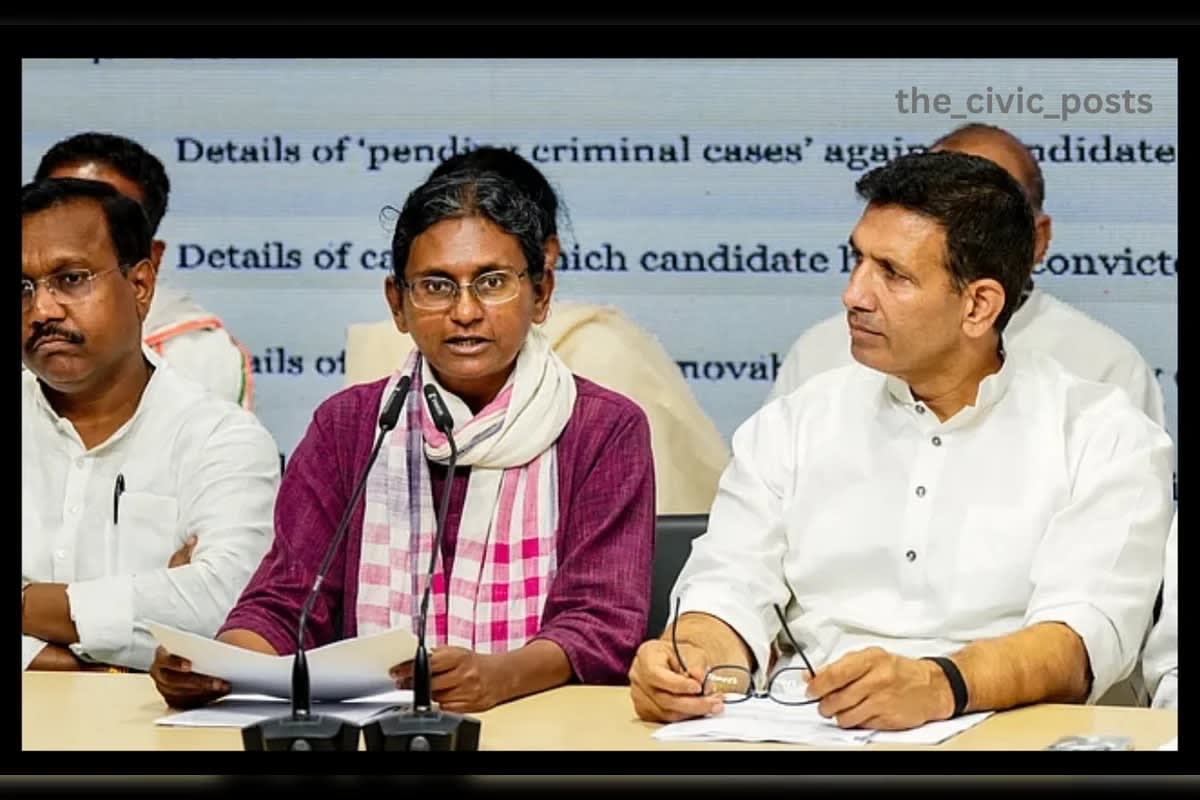
Political tensions in Telangana have once again intensified after senior Congress leader and AICC in-charge Meenakshi Natarajan launched a sharp criticism of the Special Intensive Revision (SIR) exercise, alleging that it is being misused for political advantage rather than serving citizens. Her remarks have sparked a fresh round of political debate between the ruling BJP and the Congress, with both sides trading strong accusations over electoral integrity and democratic fairness.
Speaking on the issue, Meenakshi Natarajan expressed concern that the ongoing SIR process, which is meant to update and clean electoral rolls, is not functioning in the spirit in which it was originally designed. According to her, the exercise should ensure that every eligible adult citizen is included in the voter list so that democratic participation is strengthened. However, she alleged that the current implementation is being used in a selective manner that could disadvantage ordinary citizens.
She further argued that instead of improving transparency, the process appears to be creating confusion among voters in several areas. In her view, the deletion of names from electoral rolls without proper verification or communication could lead to serious consequences. Citizens may suddenly find themselves unable to vote despite being eligible, which she described as a direct threat to democratic rights. She emphasized that voting is not just a procedural right but a fundamental pillar of democracy, and any disruption to it weakens public trust in the system.
One of her strongest allegations was that such measures could disproportionately benefit the ruling political establishment. Without naming individuals directly in all instances, she suggested that the current political framework allows advantages to certain parties while ordinary citizens face difficulties in exercising their rights. She described this situation as deeply concerning, especially in a democracy where fairness in elections is expected to be non-negotiable.
Her comments also reflected broader concerns within the opposition regarding how electoral processes are being managed in various states. According to her, there is a growing perception among people that administrative mechanisms related to elections are not fully neutral. She stressed that institutions responsible for maintaining voter lists must operate independently and without political influence, otherwise the credibility of elections could be questioned.
The allegations have triggered an immediate political response. Leaders from the BJP strongly rejected her claims, stating that the SIR exercise is a routine administrative process designed to improve the accuracy of voter records. According to them, the revision process is essential to remove duplicate entries, update records of deceased individuals, and ensure that only eligible voters remain on the list. They argued that such exercises are standard practice in any democratic country and should not be misinterpreted for political narratives.
BJP representatives further countered that the opposition is attempting to create confusion among voters by raising unnecessary doubts about a process that is meant to strengthen democracy. They claimed that instead of acknowledging administrative improvements, the Congress is framing the issue as politically motivated to gain attention and influence public opinion.
Meanwhile, Congress leaders in Telangana have backed Meenakshi Natarajan’s statements, saying that her concerns reflect ground-level feedback from party workers and citizens. They argue that many people have reported difficulties in verifying their names on voter lists and that these issues need urgent attention. According to them, any irregularities in voter registration must be corrected immediately to ensure free and fair elections.
The controversy has once again highlighted the growing political rivalry in Telangana, where both the BJP and Congress are actively competing to strengthen their influence. Over the past few years, the state has witnessed increasing political activity, with parties focusing heavily on grassroots mobilization and voter outreach. In this environment, even administrative processes like voter list revision become politically sensitive.
Experts observing the situation point out that voter list revisions are always complex in large democracies like India. With millions of names being added, removed, or updated, the process requires accuracy, transparency, and public cooperation. Even minor errors can lead to political disputes, especially in a highly competitive electoral environment. They also note that trust in electoral systems is crucial, and any perception of bias-whether accurate or not-can quickly become a major political issue.
At the same time, political analysts suggest that such controversies are not new in Indian politics. Opposition parties often raise concerns about electoral processes when they believe there may be administrative disadvantages, while ruling parties defend the system as fair and procedural. This pattern reflects the broader competitive nature of democracy, where electoral management often becomes part of political debate.
In Telangana, the situation is further complicated by ongoing political shifts and alliances. The state has seen significant changes in voter preferences and party strength over recent years, making every election highly competitive. As a result, issues related to voter lists, eligibility, and electoral fairness attract immediate attention from all major political players.
For ordinary citizens, however, the core concern remains straightforward: ensuring that their names are correctly included in voter lists and that they are able to exercise their democratic rights without obstacles. Any disruption in this process can lead to frustration and confusion, which is why electoral transparency remains a key expectation from all political institutions.
Meenakshi Natarajan’s remarks have therefore added another layer to the ongoing debate about electoral governance in India. While her supporters view her statements as a necessary warning about potential misuse of administrative systems, critics see them as politically motivated allegations aimed at questioning institutional integrity.
As the debate continues, the focus is likely to remain on how voter list revisions are conducted and whether additional safeguards are needed to ensure transparency. Political parties on all sides are expected to intensify their messaging around electoral fairness, especially as future elections approach.
In conclusion, the controversy surrounding the SIR exercise in Telangana reflects the larger intersection of politics and electoral administration in India. While one side emphasizes potential misuse and citizen inconvenience, the other defends the process as a routine democratic requirement. Amid these contrasting narratives, the central issue remains the same-ensuring that every eligible citizen retains their right to vote without obstruction and that the integrity of the electoral system remains intact.