Electoral Roll Verification and the Future of Democratic Participation in India
Editorial desk - JUN 23, 2026
Democracy derives its strength from the active participation of citizens. Among all democratic rights, the right to vote remains the most powerful instrument through which people influence governance, public policy, and the direction of a nation. Every election, whether local, state, or national, depends upon a simple but extremely important document: the electoral roll. Without an accurate voter list, even the most efficiently conducted election can face questions about fairness and legitimacy.
In a country as vast and diverse as India, maintaining a reliable electoral database is a continuous challenge. Population growth, migration, urbanization, changing addresses, deaths, and new voters entering the system every year make voter management a complex administrative task. To address these challenges, electoral authorities periodically undertake large-scale verification and revision exercises. These efforts are intended to ensure that voter records remain current and accurate. While the objective is widely accepted as necessary, the process often generates debate regarding implementation, transparency, and citizen rights.
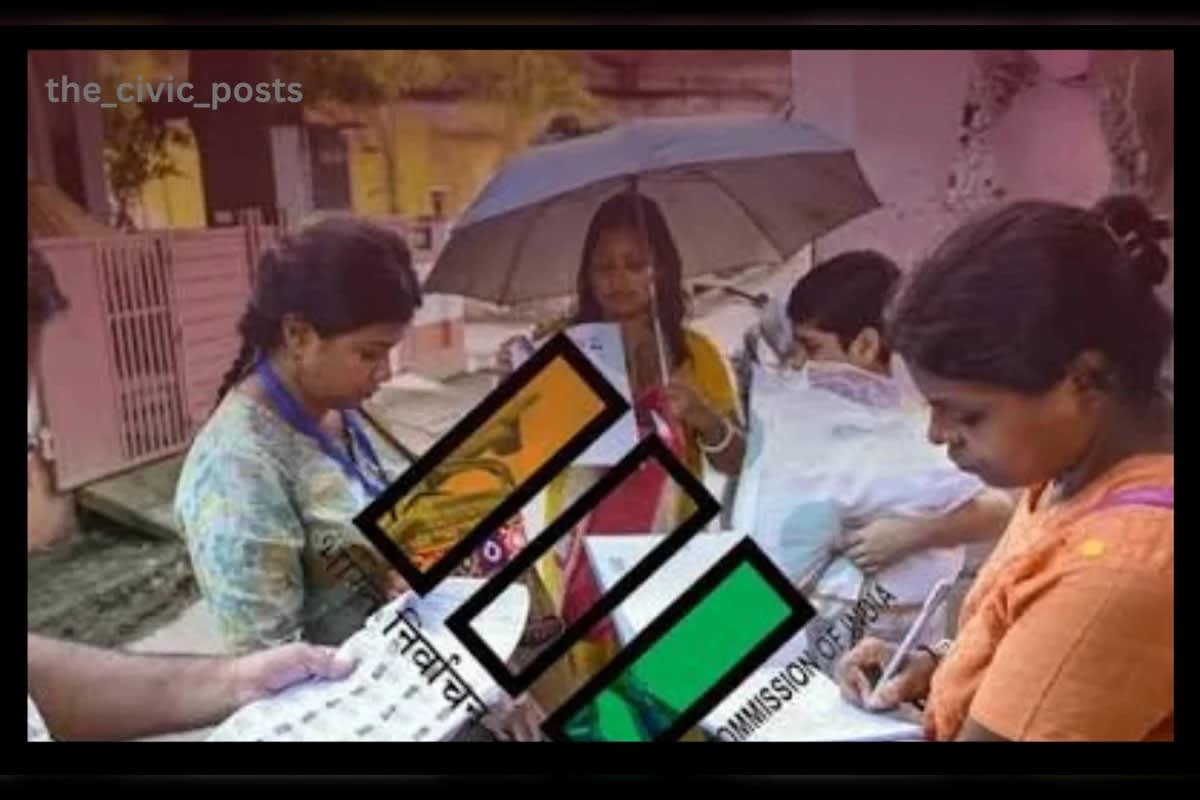
The need for electoral roll verification arises from practical realities. Over time, inaccuracies naturally develop within any large database. Some individuals may shift from one city to another without updating their voter registration details. Others may appear in multiple locations due to administrative delays in record updates. There are also cases where names remain on voter lists despite the death of a registered voter. Such issues can affect the overall quality of electoral records and create concerns about the integrity of elections.
Maintaining accurate voter rolls is therefore not merely an administrative requirement but an essential democratic responsibility. Clean and updated records help ensure that every legitimate vote counts equally and that electoral outcomes genuinely reflect public opinion. When citizens trust the electoral process, confidence in democratic institutions grows stronger.
However, achieving accuracy is far easier in theory than in practice. India's population exceeds a billion people, spread across thousands of towns and villages with diverse languages, naming traditions, and documentation systems. Managing such a massive volume of data requires a combination of human effort and technological support.
In recent years, technology has become increasingly important in voter verification exercises. Digital databases, data-matching software, and automated screening systems allow election officials to process information more efficiently than ever before. These tools can identify potential duplicate entries, detect inconsistencies, and help streamline administrative tasks.
Technology undoubtedly offers significant advantages. Manual verification of millions of records would require enormous time and resources. Automated systems can analyze data at speeds that would be impossible through traditional methods. As governments continue embracing digital governance, technological integration within electoral management appears both logical and necessary.
Yet technology also introduces new challenges. Human identities are often more complex than digital records suggest. A person's name may be spelled differently across various documents. Address formats may vary depending on local conventions. Transliteration between languages can create inconsistencies. Automated systems sometimes struggle to interpret such variations accurately.
For example, two unrelated individuals with similar names may be incorrectly identified as duplicate entries. Likewise, the same individual may appear differently across multiple records due to spelling variations. When technology relies heavily on pattern recognition without sufficient human oversight, genuine voters may be flagged for further scrutiny or even removed from databases by mistake.
Such possibilities have generated concern among election observers and civil society groups. While technological efficiency is valuable, the consequences of errors become particularly serious when they affect voting rights. Unlike routine administrative mistakes, inaccuracies in voter registration can directly influence democratic participation.
The challenge becomes even greater for vulnerable sections of society. Individuals living in rural areas, migrant workers, elderly citizens, and economically disadvantaged communities may face additional barriers when required to verify or update their records. Access to documentation, transportation, internet connectivity, and administrative assistance varies significantly across different regions.
Many citizens may not regularly check their voter registration status until an election approaches. Discovering registration problems at the last minute can create frustration and uncertainty. In some cases, individuals may find themselves navigating unfamiliar bureaucratic procedures simply to restore their eligibility to vote.
These concerns highlight the importance of balancing administrative efficiency with citizen convenience. Electoral systems must remain accessible to all eligible voters regardless of social, economic, or geographic circumstances. A process designed to strengthen democracy should not unintentionally create obstacles for participation.
Transparency plays a critical role in maintaining public confidence during voter verification exercises. Citizens need clear information regarding how records are reviewed, what criteria are used for verification, and what steps they should take if discrepancies arise. Uncertainty often creates suspicion, while openness helps build trust.
Public awareness campaigns can significantly improve citizen engagement. Many people remain unaware of available tools for checking voter registration status or correcting inaccuracies. Educational initiatives through digital platforms, community programs, and local outreach efforts can help ensure that voters remain informed about their rights and responsibilities.
Another important element is accountability. Administrative decisions affecting voter registration should be subject to clear procedures and safeguards. Citizens must have opportunities to receive notifications, provide clarifications, and appeal decisions when necessary. Fairness requires that individuals are not deprived of their voting rights without proper verification and due process.
Human oversight remains essential despite technological advancements. While software systems can identify potential issues, final decisions often benefit from local verification and contextual understanding. Election officials working directly within communities are often better positioned to assess circumstances that may not be fully captured in digital records.
The broader discussion surrounding voter verification also reflects larger questions about democratic governance in the digital age. As governments increasingly rely on data-driven systems, societies must determine how technology can serve public interests without compromising individual rights. Efficiency, while important, should never overshadow the principles of inclusiveness, fairness, and accountability.
India's electoral system has long been recognized as one of the largest democratic exercises in the world. Conducting elections across such a vast and diverse population requires remarkable organizational capacity. The continued success of this system depends not only on technological modernization but also on maintaining public trust.
Trust is built when citizens believe that institutions operate fairly, transparently, and in accordance with democratic values. Every eligible voter must feel confident that their name is correctly recorded, their voice matters, and their participation is protected. Electoral reforms should therefore focus not only on improving databases but also on strengthening the relationship between citizens and democratic institutions.
Looking forward, the future of electoral management will likely involve greater integration of technology, improved data systems, and enhanced digital services. These developments have the potential to improve accuracy and convenience significantly. However, their success will depend on thoughtful implementation, strong safeguards, and continuous public engagement.
Ultimately, the purpose of electoral roll verification is not simply to remove errors from a database. Its deeper objective is to preserve the integrity of democratic participation. A healthy democracy requires both accurate records and inclusive processes. The challenge lies in achieving both simultaneously.
In conclusion, voter verification and electoral roll revision are essential components of a functioning democracy. They help maintain accurate records, protect electoral integrity, and strengthen confidence in election outcomes. At the same time, these processes must remain transparent, accessible, and respectful of citizen rights. By combining technological innovation with human oversight and democratic accountability, India can continue building an electoral system that is both efficient and inclusive. Such a balance is vital for preserving the trust upon which democracy ultimately depends.