Remembering Bharathiraja: The Voice of the Common Man Falls Silent at 84
Editorial desk - JUN 10, 2026
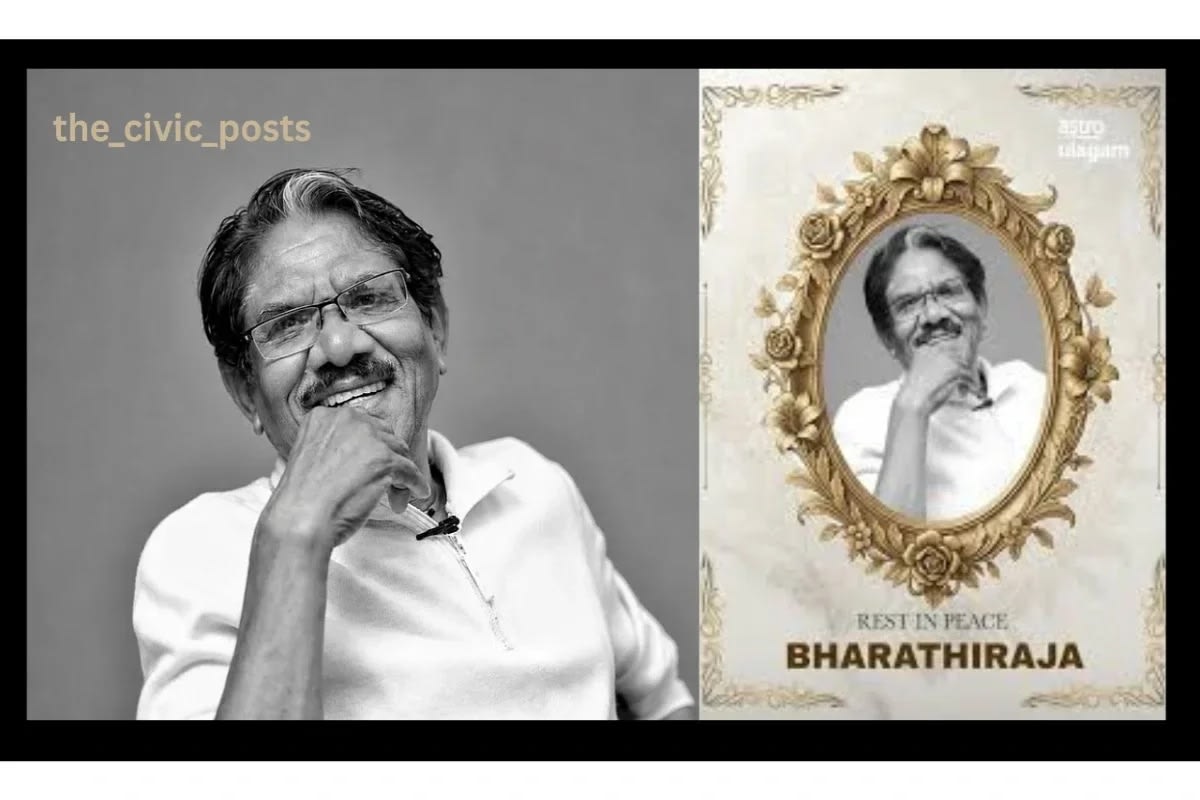
The passing of veteran filmmaker and actor Bharathiraja at the age of 84 marks the profound conclusion of an extraordinary chapter in the history of Indian cinema, leaving a void that the regional and national film fraternities will find incredibly difficult to fill. For decades, he stood as a towering pillar of creative genius, fundamentally altering how stories were visualized, structured, and executed in South India. His demise represents not just the loss of an individual artist, but the departure of a grand visionary who single-handedly steered Tamil cinema out of artificial, strictly controlled studio environments and planted it firmly into the vibrant, raw, and dusty realities of rural life.
His health had unfortunately been on a downward trajectory for quite some time, reflecting a prolonged and difficult battle against a multitude of age-related complications that gradually weakened his once-resilient frame. The decline became particularly noticeable toward the tail end of the previous year, when severe breathing challenges necessitated an urgent admission into a premier medical facility in Chennai.
Over the final months of his life, his existence was largely defined by continuous medical monitoring, multiple bouts of hospitalization, and specialized treatments designed to manage a progressive lung infection alongside recurrent respiratory distress.
Though medical practitioners worked diligently to stabilize his condition during various crises, and multiple figures from the entertainment and political landscape visited him to offer their support, the physical toll of these compounding ailments became visibly evident to the public through the sparse images that emerged during his final days, showing a legendary creator looking fragile but fighting bravely.
Compounding this severe physical decline was a heavy emotional burden that many close to the family believe fundamentally shattered his spirit and accelerated his physical deterioration. Just a year prior to his own departure, Bharathiraja suffered a catastrophic personal tragedy when his son, Manoj Bharathiraja, a well-known actor and director in his own right, passed away suddenly due to a cardiac arrest at the young age of 48.
The grief of outliving a child is a sorrow of immeasurable depth, and for a father already navigating the vulnerabilities of advanced age, this loss proved to be a devastating psychological blow. Associates and family members frequently observed that the director found it immensely challenging to cope with the sudden emptiness left by his son's passing, and the profound sorrow deeply affected his holistic well-being, diminishing his internal drive to fight the aggressive physical illnesses that were steadily overwhelming his respiratory system.
It is often said in artistic circles that the body struggles to heal when the heart is deeply broken, and this poignant reality seemed to mirror the twilight phase of the director's journey, as his physical defenses gradually gave way following months of persistent lung complications.
To fully comprehend the magnitude of the grief surrounding his death, one must examine the monumental legacy he leaves behind, a legacy built on a revolutionary approach to visual storytelling that began in the late 1970s. Before his arrival, mainstream Tamil cinema was heavily dominated by theatrical performances, heavily stylized dialogue delivery, and grand sets constructed inside indoor studios that often felt detached from the actual experiences of the common citizen.
Bharathiraja disrupted this established status quo entirely with his spectacular 1977 directorial debut, a cinematic masterpiece that brought natural lighting, authentic village backdrops, and deeply human vulnerabilities to the forefront of the silver screen. By choosing to shoot on location in real villages, he captured the authentic essence of rural life, including its unique dialects, local customs, complex social hierarchies, and raw emotional landscapes.
This stylistic shift was not merely a technical choice but a philosophical revolution that proved realistic stories rooted in native soil could achieve monumental commercial and critical success. His subsequent filmography further solidified his reputation as a master craftsman, characterized by a versatile ability to switch between intense psychological thrillers, deeply moving romantic dramas, and politically charged narratives that challenged prevailing societal norms.
Beyond his technical brilliance and his eye for breathtaking landscapes, his true genius lay in his unmatched ability to spot, nurture, and launch raw talent into the cinematic cosmos. He possessed an almost prophetic instinct for recognizing star quality and artistic potential in ordinary individuals, introducing a stellar gallery of actors, musicians, technicians, and writers who would go on to shape the destiny of Indian cinema for generations.
He took immense risks by casting completely new faces in central roles, stripped them of conventional cinematic glamor, and demanded performances that were grounded in absolute authenticity. This unique mentorship extended to every department of filmmaking, creating an entire generation of storytellers who learned the craft under his watchful guidance and subsequently propagated his realistic school of cinema across various regional languages.
His sets operated as open-air universities where the conventional rules of commercial filmmaking were routinely broken and rewritten, establishing a new grammatical framework for modern Indian directors to follow.
The nation rightfully showered him with its highest honors in recognition of his unparalleled contributions to the cultural fabric of the country. Throughout his spanning career, he was the recipient of multiple highly coveted National Film Awards, which recognized his excellence in direction, screenwriting, and thematic presentation. Furthermore, his lifelong dedication to elevating the artistic standards of Indian cinema earned him the prestigious Padma Shri, one of the nation's highest civilian honors, sealing his status as a national treasure.
In the latter phases of his career, he seamlessly transitioned into acting, gracing the screen with powerful, weathered performances that carried the same depth, authority, and emotional resonance that he previously demanded from his actors behind the camera. His presence on screen in his twilight years served as a beautiful full-circle moment, allowing a new generation of cinemagoers to experience his magnetic artistry firsthand.
Ultimately, while the physical journey of this master storyteller has concluded due to the inevitable frailties of the human body, the cinematic path he forged remains completely indestructible. He transformed the medium of film from a source of mere escapist entertainment into a vibrant, living mirror capable of reflecting the true soul of the land and its people.
The countless artists he discovered will continue to carry his creative flame forward, and the masterpieces he leave behind will remain timeless reference points for aspiring filmmakers seeking to understand the delicate balance between commercial appeal and artistic truth.
His passing marks the physical departure of a legend, but his visionary spirit is permanently woven into the very fabric of Indian cinema, ensuring that whenever a camera pans across a rustic landscape or captures a deeply authentic human emotion, the enduring influence of Bharathiraja will be felt.