Political Storm Intensifies for AIADMK After Yet Another Resignation
Alekhya Kota - MAY 26, 2026
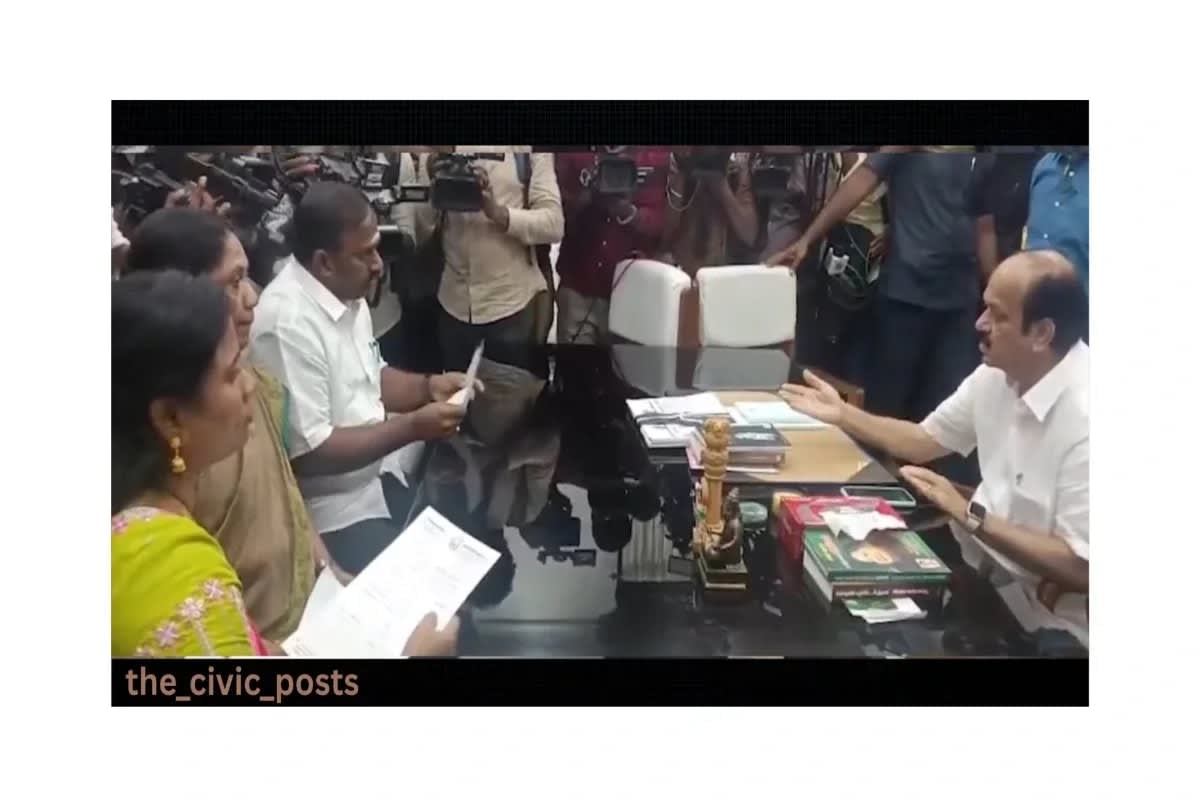
The political troubles of All India Anna Dravida Munnetra Kazhagam appear to be deepening after yet another MLA resigned from the Tamil Nadu Assembly, creating fresh concerns about the party’s internal stability. Ambasamudram MLA Esakki Subaya became the fourth legislator from the party to step down within a short span, delivering another major setback to the opposition camp in Tamil Nadu politics.
The resignation has intensified discussions about growing dissatisfaction and factional tensions within the AIADMK following the recent Assembly elections. Political observers believe the latest development signals that the party is struggling to maintain unity at a crucial time when it is attempting to rebuild its strength and position in the state.
Esakki Subaya reportedly submitted his resignation to Assembly Speaker J. C. D. Prabhakar at the Secretariat in Chennai. Initially, there were reports that the Speaker asked him to resubmit the resignation in handwritten format to ensure it was being made voluntarily and according to Assembly rules. After complying with the requirement, the resignation was officially accepted.
The resignation becomes more politically significant because it follows the departure of three other AIADMK MLAs just a day earlier. Those legislators had also resigned from the Assembly and later extended support to the ruling Tamilaga Vettri Kazhagam led by Chief Minister C. Joseph Vijay.
With four MLAs now exiting the party, AIADMK’s strength in the Assembly has reportedly reduced further, adding pressure on the leadership to prevent additional defections. Political analysts say the resignations are not merely isolated decisions but may reflect deeper disagreements over leadership style, political direction, and the future strategy of the party after its recent electoral struggles.
The AIADMK was once regarded as one of the most dominant political forces in Tamil Nadu, shaping the state’s political landscape for decades under legendary leaders like J. Jayalalithaa and M. G. Ramachandran. However, after the passing of Jayalalithaa, the party has repeatedly faced internal power struggles, factionalism, and leadership challenges. Many observers believe these issues continue to affect the organization even today.
Recent election results added further pressure on the party. The emergence of Vijay’s TVK as a major political force in Tamil Nadu has dramatically changed the state’s political dynamics. The actor-turned-politician’s growing popularity has attracted significant attention, especially among younger voters and certain sections of regional leaders.
The resignation of MLAs from AIADMK and their movement toward TVK is being viewed by many as a sign of shifting political loyalties in the state. Some political experts believe certain legislators see greater long-term opportunities in aligning with the rising political momentum surrounding Vijay and his party. Others argue that dissatisfaction within AIADMK’s internal structure may have accelerated these exits.
Esakki Subaya himself stated that his decision was taken keeping the interests of his constituency in mind and indicated that he would provide a more detailed explanation later. His statement has further fueled speculation about possible dissatisfaction with the current functioning of the party leadership.
Within AIADMK, the situation has reportedly created anxiety among senior leaders. There are growing fears that more legislators could reconsider their positions if the internal crisis is not controlled quickly. The resignations have also increased pressure on the party leadership to restore confidence among cadres and prevent the image of instability from spreading further.
At the same time, party supporters argue that AIADMK has survived several political crises in the past and still retains a strong grassroots network across Tamil Nadu. They believe temporary setbacks should not be interpreted as the collapse of the organization. Many loyalists remain confident that the party can regroup and recover through organizational restructuring and stronger leadership coordination.
The controversy has also sparked debate about political loyalty and ideological commitment in modern Indian politics. Critics argue that frequent defections weaken democratic accountability because voters elect representatives based on party affiliation and promises made during elections. Supporters of the resigning MLAs, however, claim elected representatives must have the freedom to make political decisions based on changing circumstances and public interest.
Another major talking point is the growing influence of TVK in Tamil Nadu politics. Since entering the political arena, Vijay has rapidly transformed from a cinema superstar into one of the most discussed political figures in the state. His party’s expanding influence has started reshaping alliances and power equations across Tamil Nadu.
For AIADMK, the coming weeks could become extremely important. The party leadership now faces the difficult task of maintaining unity, calming internal tensions, and convincing both workers and voters that it remains a strong alternative force in Tamil Nadu politics. Failure to manage the situation effectively could encourage further instability and damage public confidence.
Meanwhile, opposition parties and political analysts are closely monitoring every development. The resignation episode has already become one of the biggest political discussions in Tamil Nadu, with debates focusing on whether AIADMK is facing a temporary phase of unrest or a much deeper structural crisis.
As political uncertainty continues, the latest resignation serves as another reminder of how rapidly Tamil Nadu’s political landscape is evolving. The rise of new political forces, shifting loyalties, and internal factional battles are creating a highly competitive environment where every decision now carries major political consequences.