Switzerland Summit Could Shape the Future of U.S.-Iran Relations
Alekhya Kota - JUN 20, 2026
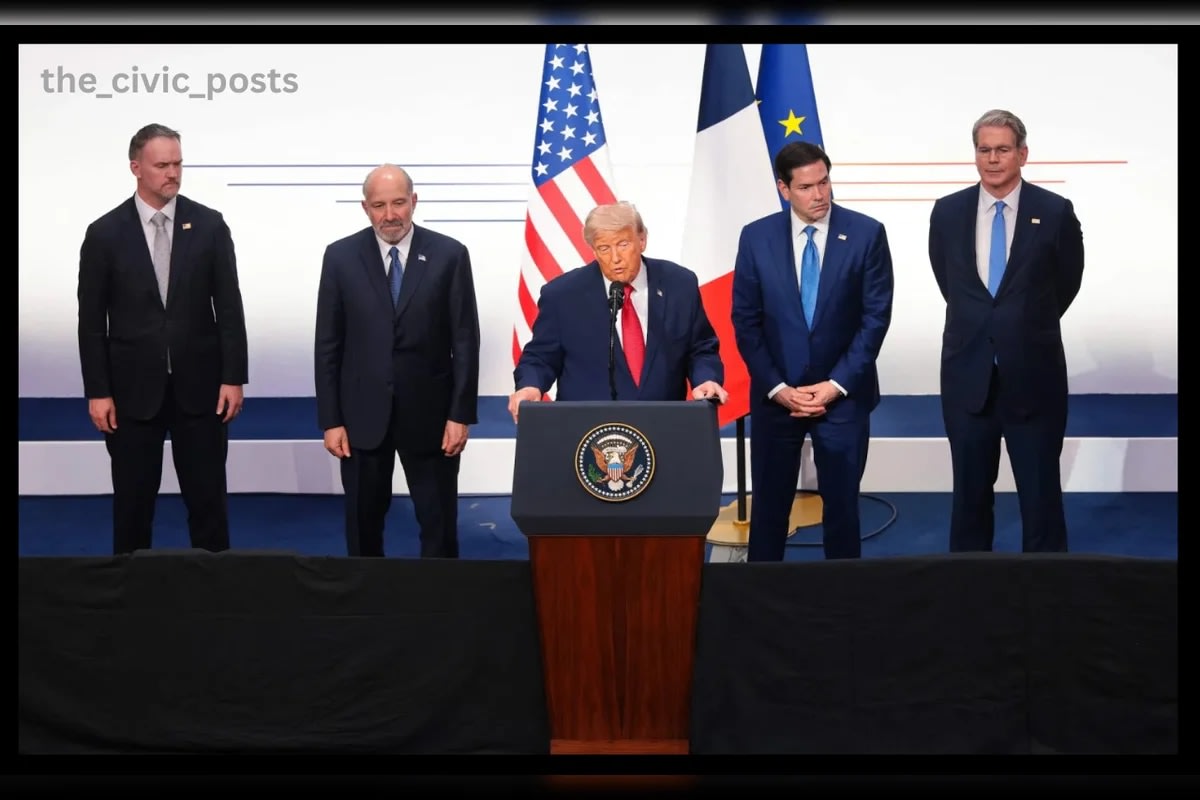
The Middle East has once again become the focus of global attention following recent developments involving a ceasefire between key regional players after a period of intense tensions and military confrontations. While the agreement has provided a temporary sense of relief and reduced fears of an immediate escalation, experts believe that the path toward lasting peace remains uncertain. The situation highlights both the possibilities and limitations of diplomacy in one of the world's most complex and politically sensitive regions.
For months, concerns had been growing about the possibility of a larger conflict spreading across national borders. Military actions, retaliatory strikes, and increasingly aggressive political rhetoric created an atmosphere of uncertainty. Governments, international organizations, and global markets closely monitored developments, fearing that a wider confrontation could have significant consequences for regional stability and the global economy.
The announcement of a ceasefire brought a welcome pause to hostilities. Many viewed it as a necessary step toward preventing further violence and creating an opportunity for diplomatic engagement. In regions affected by conflict, even a temporary reduction in fighting can make a meaningful difference in the lives of ordinary people. Families gain a chance to return to some level of normalcy, communities experience a reduction in fear, and humanitarian efforts can proceed with fewer obstacles.
Despite the positive response to the ceasefire, many observers remain cautious. History has shown that agreements reached during periods of crisis can be fragile. Ceasefires often provide breathing space, but they do not automatically resolve the underlying political, territorial, and security disputes that fuel conflicts. As a result, the current situation is being viewed as an opportunity rather than a guaranteed solution.
One of the key challenges in the region is the deep mistrust that exists among various parties. Decades of conflict, political disagreements, and competing strategic interests have created an environment where suspicion often outweighs confidence. Even when leaders agree to reduce hostilities, maintaining that commitment can be difficult. Any misunderstanding, unexpected incident, or perceived violation of agreements has the potential to reignite tensions.
The role of diplomacy has been crucial in reaching the current stage. Behind every ceasefire lies a series of negotiations, discussions, and efforts aimed at finding common ground. Diplomatic channels often operate quietly, away from public attention, but their impact can be significant. Mediators, negotiators, and international stakeholders frequently work to bridge differences and encourage dialogue between opposing sides.
The latest developments demonstrate the importance of keeping communication channels open, even during periods of intense hostility. In many conflicts, dialogue becomes one of the few tools capable of preventing situations from spiraling out of control. While diplomacy may not produce immediate solutions, it often helps create conditions where progress becomes possible.
Another important aspect of the ceasefire is its impact on regional stability. The Middle East occupies a strategically important position in global affairs. Political developments in the region influence energy markets, trade routes, investment decisions, and international security concerns. As a result, instability in the region can have consequences far beyond its borders.
Global markets often react quickly to signs of conflict in the Middle East. Investors pay close attention to developments because disruptions can affect oil prices, transportation networks, and economic confidence. A reduction in tensions therefore tends to be viewed positively not only by regional governments but also by businesses and financial institutions around the world.
While geopolitical considerations are important, the human impact of conflict remains the most significant concern. Civilians living in affected areas often bear the greatest burden during periods of violence. Families may be displaced, livelihoods disrupted, and communities damaged. Children, in particular, can face long-term consequences when conflict interrupts education, healthcare, and social stability.
For many residents of the region, the ceasefire represents more than a political agreement. It symbolizes hope for a future in which daily life is not dominated by uncertainty and fear. The possibility of peace, even if temporary, provides encouragement to communities that have endured repeated cycles of conflict over many years.
At the same time, achieving a durable peace requires addressing the deeper issues that contribute to instability. These issues often include security concerns, territorial disputes, political rivalries, and competing visions for the future of the region. Without meaningful progress on these matters, ceasefires risk becoming temporary pauses rather than lasting solutions.
Political leaders face the difficult task of balancing domestic expectations with international responsibilities. Governments must respond to the concerns of their citizens while also considering the broader implications of their decisions. In highly sensitive environments, even small policy choices can have far-reaching consequences. This complexity makes conflict resolution an ongoing challenge.
The current situation has also highlighted the growing importance of international cooperation. Modern conflicts rarely remain confined to a single country or region. Global powers, neighboring states, and international organizations often become involved in efforts to prevent escalation and encourage dialogue. Their involvement can provide valuable support for peace initiatives, although it can also introduce additional layers of complexity.
Technology and communication have further transformed the way conflicts are perceived and managed. News spreads instantly, public reactions emerge rapidly, and leaders face constant scrutiny from both domestic and international audiences. This environment creates new opportunities for transparency but also increases pressure on decision-makers. Managing public expectations while pursuing diplomatic solutions has become an increasingly delicate task.
Many analysts believe that the current ceasefire should be viewed as the beginning of a process rather than its conclusion. Sustainable peace requires patience, commitment, and a willingness to engage in difficult conversations. Trust cannot be rebuilt overnight, and long-standing disagreements rarely disappear through a single agreement. Progress often occurs gradually through a series of small but meaningful steps.
The experience of other regions demonstrates that lasting peace is possible when political leaders prioritize dialogue and compromise. While every conflict has unique characteristics, successful peace processes often share common elements, including inclusive negotiations, respect for agreements, and a focus on addressing underlying grievances. These principles remain relevant in the Middle East as well.
Public opinion will also play an important role in shaping future developments. Citizens across the region increasingly desire stability, economic growth, and opportunities for future generations. Leaders who can respond to these aspirations may find greater support for peaceful solutions. Ultimately, the success of diplomatic efforts depends not only on governments but also on the willingness of societies to embrace coexistence and mutual understanding.
The recent ceasefire has undoubtedly reduced immediate tensions and prevented further escalation. However, it also serves as a reminder that peace is a continuous effort rather than a single event. The challenges facing the region remain significant, and many difficult questions have yet to be resolved.
Nevertheless, moments like these offer valuable opportunities. They create space for dialogue, encourage reflection, and demonstrate that even in the most difficult circumstances, diplomacy can produce results. While uncertainty remains, the ceasefire has provided a foundation upon which future negotiations can build.
As the world watches developments unfold, there is cautious optimism that the reduction in hostilities may lead to broader discussions about security, cooperation, and regional stability. Whether this opportunity ultimately results in lasting peace will depend on the choices made by leaders in the months ahead. For now, the ceasefire stands as an important reminder that despite deep divisions and longstanding conflicts, the possibility of dialogue and progress still exists.