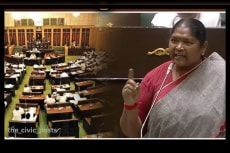
Telangana Politics Heats Up as Harish Rao Targets Singareni Operations
Alekhya Kota - JUN 13, 2026

Telangana politics once again witnessed a heated debate after senior BRS leader and former minister T. Harish Rao made strong allegations regarding alleged large-scale irregularities in the Singareni Collieries Company Limited (SCCL). His remarks have triggered political discussions across the state, especially because Singareni is considered one of the most important public sector undertakings in Telangana, contributing significantly to employment, revenue, and the state’s energy sector.
Harish Rao claimed that multiple financial irregularities and administrative lapses have taken place within the organisation under the current governance. According to him, these alleged issues point towards systematic misuse of funds, improper tender processes, and decisions that may have led to significant financial burden on the public sector unit.
At the centre of his allegations is the claim that contracts and tenders within Singareni have not been executed transparently. He suggested that certain changes in tender conditions may have benefited select contractors, leading to inflated project costs. He further indicated that such practices, if true, could have resulted in losses worth hundreds of crores of rupees to the organisation.
One of the key points raised by him relates to the alleged manipulation of tender procedures. He argued that modifications in eligibility criteria and procedural requirements created a situation where competition was reduced, allowing a limited set of contractors to dominate major projects. According to his version, this lack of competitive bidding may have pushed project costs higher than necessary.
Another serious allegation involves overburden removal contracts and mining-related work allocations. Harish Rao stated that earlier such contracts were awarded at competitive rates, which helped the organisation maintain financial discipline. However, he alleged that recent changes have led to higher bidding prices, resulting in additional financial pressure on Singareni. He suggested that this shift in pricing patterns requires detailed investigation.
He also raised concerns about transparency in operational decisions. According to him, some of the administrative changes introduced in recent times may have reduced accountability within the system. He pointed out that when transparency weakens in a large public sector organisation, it often opens doors for inefficiency, mismanagement, and financial leakages.
Another important issue highlighted by Harish Rao is related to coal production and stock management. He indirectly referred to concerns about discrepancies between reported coal reserves and actual availability. He suggested that such mismatches, if verified, could indicate deeper issues in record-keeping and resource tracking within the organisation.
He further alleged that financial strain on Singareni has increased due to rising dues and pending payments. According to his remarks, outstanding amounts from various departments and agencies have placed additional pressure on the company’s cash flow. He argued that such financial stress affects not only the organisation’s stability but also the welfare of employees who depend on its performance.
Harish Rao also questioned certain policy decisions related to power and energy operations linked with Singareni. He suggested that some decisions may not have been aligned with the long-term financial interests of the organisation. According to him, any deviation from efficient financial planning in a public sector unit of this scale can have long-lasting consequences.
The BRS leader’s statements also touched upon governance concerns. He argued that public sector organisations like Singareni require strong oversight, strict auditing mechanisms, and transparent decision-making processes. Without these safeguards, he warned, there is a risk of systemic inefficiencies developing over time.
His comments have naturally led to a political debate in Telangana. While opposition leaders are demanding a detailed investigation into the allegations, ruling party representatives are countering the claims, stating that decisions in Singareni are being taken in accordance with existing rules and procedures. This back-and-forth has added another layer of political tension in the state.
Singareni Collieries, being one of the largest coal mining organisations in South India, plays a critical role in Telangana’s economy. It not only supplies coal for power generation but also provides direct and indirect employment to thousands of workers. Because of its importance, any allegation related to corruption or mismanagement tends to attract widespread attention.
Industry observers believe that if such allegations are raised at a political level, they may lead to increased scrutiny of internal operations. In many cases, such discussions often result in audits, departmental reviews, or calls for independent investigations to ensure transparency.
At the same time, experts also caution that public statements made in political contexts should be supported by documentary evidence and verified data. Without proper proof, such allegations remain part of political discourse rather than confirmed facts. However, they still play a significant role in shaping public perception and policy discussions.
Harish Rao’s remarks also reflect a broader political narrative in Telangana, where governance, public finance, and administrative accountability have become key discussion points. In recent years, several public sector institutions have come under scrutiny for their financial decisions, making transparency an increasingly important issue in political debates.
The demand for accountability in large state-run enterprises is not new, but it gains renewed attention whenever senior leaders raise concerns. In this case, the focus is on whether Singareni’s tendering system and financial management processes are functioning efficiently and fairly.
If investigations are initiated, they are likely to examine tender procedures, contract allocations, pricing structures, and financial transactions within the organisation. Such reviews would aim to ensure that public resources are being used effectively and that there is no scope for irregularities.
Meanwhile, employees and stakeholders of Singareni are closely watching the developments. For them, stability, timely salaries, and organisational growth remain top priorities. Any prolonged controversy could potentially impact morale and operational confidence.
In conclusion, Harish Rao’s allegations have once again brought Singareni Collieries into the political spotlight. While the claims have stirred debate and demand for clarity, the final truth will depend on whether any formal inquiry or audit substantiates these concerns. Until then, the issue remains a significant political and administrative talking point in Telangana’s evolving governance landscape.