Delimitation and Democracy: Balancing Representation and Regional Fairness
Delimitation in India: Meaning, History, Seat Increase, Criteria and Concerns from States
Kranthi Shekar - APR 22, 2026
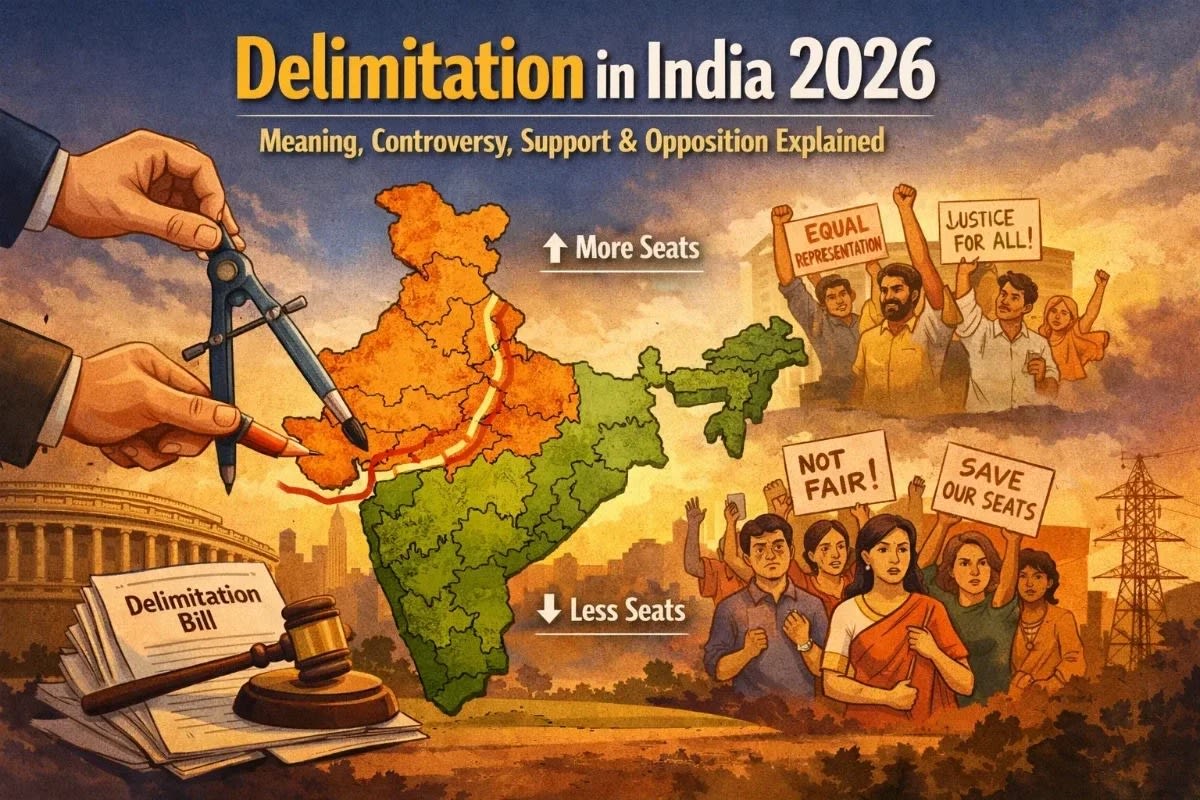
Delimitation is once again emerging as one of the most important political developments in India. With the freeze on redistribution of parliamentary seats expected to end after 2026, the country is preparing for a major political restructuring that could reshape representation in Parliament for decades.
This upcoming exercise is expected to increase Lok Sabha seats, redraw constituency boundaries, and change the balance of political influence among states. While delimitation is aimed at ensuring fair representation, it has also triggered concerns, particularly from southern and smaller states that fear losing their political weight.
To understand the issue clearly, it is important to look at what delimitation means, when it started, how seats may increase, the criteria used, and the concerns raised by different states.
What is Delimitation?
Delimitation refers to the process of fixing or redrawing the boundaries of electoral constituencies. This process ensures that each elected representative represents nearly the same number of people.
As population changes over time, some regions grow faster while others grow slowly. This leads to uneven representation, where some Members of Parliament represent significantly larger populations than others. Delimitation corrects this imbalance by adjusting constituencies and increasing seats where necessary.
The main objectives of delimitation are:
*Ensure equal representation for citizens
*Adjust constituency boundaries based on population
*Increase or redistribute seats
*Reorganise reserved constituencies for Scheduled *Castes and Scheduled Tribes
*Maintain fairness in democratic representation
In simple terms, delimitation helps keep democracy balanced by making sure each vote carries similar weight.
When Did Delimitation Start in India?
India began delimitation soon after independence to reflect population changes.
Major delimitation exercises were conducted in:
*1952 – First delimitation after the first general elections
*1963 – Second delimitation exercise
*1973 – Third delimitation exercise
*2002 to 2008 – Most recent delimitation exercise
However, a major turning point came in 1976. The government decided to freeze the redistribution of Lok Sabha seats among states. This decision was taken to promote population control.
The reasoning was that states that successfully reduced population growth should not lose seats in Parliament. If redistribution was allowed, states with lower population growth could lose political representation.
This freeze was extended several times and is currently in place until 2026. After the freeze ends, India is expected to conduct one of the biggest delimitation exercises in its history.
Current Lok Sabha Representation
At present:
*Total Lok Sabha seats: 543
*Representation largely based on older population data
*Population growth has changed significantly across states
Over decades, some states have experienced rapid population growth while others have stabilized. As a result, MPs from high-population states represent much larger numbers of voters compared to MPs from other regions.
This imbalance has made delimitation necessary.
Expected Increase in Lok Sabha Seats
The upcoming delimitation is expected to increase the number of Lok Sabha seats significantly.
Estimated projections suggest:
*Current seats: 543
*Expected seats: Around 750 to 850
*Overall increase: Around 40% to 50%
The new Parliament building has also been designed to accommodate more members, indicating that expansion is expected.
The increase in seats is also linked to women's reservation implementation, which requires additional constituencies to maintain representation balance.
Previous Seats and Likely Increase
Andhra Pradesh
*Current Lok Sabha seats: 25
*Expected seats: Around 37 to 38
*Increase: 12 to 13 seats
*Percentage increase: Nearly 50%
Assembly seats in Andhra Pradesh may also increase:
*Current Assembly seats: 175
*Expected seats: Around 260
This increase could significantly change political competition in the state.
Telangana
*Current Lok Sabha seats: 17
*Expected seats: Around 24 to 26
*Increase: 7 to 9 seats
*Percentage increase: Around 40% to 50%
Assembly seats are also expected to increase in Telangana.
Southern States Combined
*Current seats: Around 129
*Expected seats: Around 190 to 200
*Increase: 60 to 70 seats
*Percentage increase: Around 45% to 50%
However, even though southern states gain seats, their overall share in Parliament may reduce compared to northern states.
States Likely to Gain the Most
States with higher population growth are expected to gain more seats.
Major Gainers
*Uttar Pradesh
*Bihar
*Madhya Pradesh
*Rajasthan
*Jharkhand
*Chhattisgarh
These states have seen faster population growth over decades.
Moderate Gainers
*Andhra Pradesh
*Telangana
*Tamil Nadu
*Karnataka
*Kerala
These states controlled population growth more effectively, resulting in relatively smaller gains.
Percentage of Expected Increase
Region Expected Increase
North India 50% or more
South India 40% to 50%
East India 40% to 50
Northeast 20% to 30%
Overall, the nationwide increase is expected to be close to 50%.
Criteria Behind Delimitation
Delimitation is carried out based on several key principles:
Population
Population is the most important factor. Areas with higher population get more seats.
Equal Representation
Each constituency should represent roughly equal population.
Geographic Factors
Large or difficult terrain areas may receive special consideration.
Administrative Convenience
District boundaries and governance efficiency are considered.
SC/ST Population
Reserved constituencies are adjusted according to population changes.
Census Data
Latest census figures are used for redistribution.
These factors ensure balanced representation and smooth governance.
Concerns from Different States
The upcoming delimitation has triggered concerns from multiple states, especially southern states.
Population Control Concern
Southern states invested heavily in education, healthcare, and family planning. As a result, population growth slowed.
However, since delimitation is based mainly on population, states with higher growth may gain more seats. This creates concern that states that controlled population growth may lose relative influence.
Political Power Shift
If northern states gain more seats, they may gain stronger influence in Parliament. Southern states worry this may reduce their voice in national decision-making.
This could shift political balance toward high-population states.
Economic Contribution vs Representation
Southern states contribute significantly to India's economy. They perform better in industrial growth, education, and development indicators.
However, representation may not increase proportionately. This has triggered debate about fairness.
Federal Balance Concerns
Some leaders worry that delimitation may concentrate political power in a few large states. This may weaken the federal structure and reduce regional influence.
This could impact policymaking and resource allocation.
Why Delimitation is Necessary
Despite concerns, delimitation remains important because:
*Population has changed drastically
*Urbanisation has increased
*Some MPs represent far more voters
*Equal representation is essential for democracy
Without delimitation, the value of votes becomes unequal.
The Road Ahead
The delimitation exercise expected after 2026 is likely to be one of the biggest political changes in India's democratic history. It will increase parliamentary seats, redraw constituencies, and reshape political influence.
While the goal is to ensure equal representation, balancing regional interests and maintaining federal harmony will be crucial. As the country moves closer to delimitation, debates are expected to intensify, making it one of the most important political developments in the coming years.