Operation Absolute Resolve: A Stress Test For The Un Charter Of 1945
It Has Triggered A Profound Legal Crisis, Acting As A High-stakes Stress Test For The Un Charter Of 1945, The Very Document Designed To Prevent Unilateral Military Interventions
AKI - FEB 14, 2026
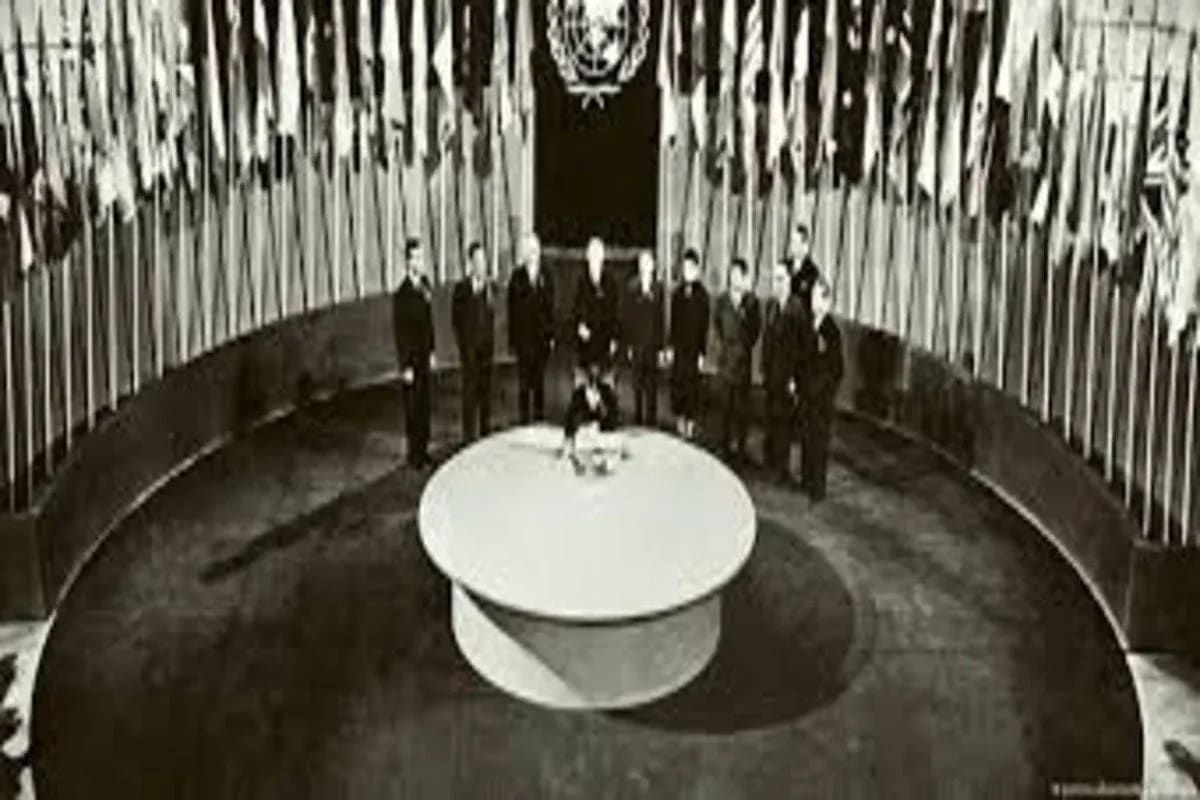
In the early hours of January 3, 2026, the geopolitical landscape was irrevocably altered by "Operation Absolute Resolve"—a daring U.S. special forces raid in Caracas that resulted in the capture of Venezuelan President Nicolás Maduro. By January 5, the world watched a scene once thought impossible: a sitting head of state appearing in a Manhattan federal court to face narco-terrorism charges. While the arrest was a tactical success for Washington, it has triggered a profound legal crisis, acting as a high-stakes stress test for the UN Charter of 1945, the very document designed to prevent unilateral military interventions and protect national sovereignty.
The global response reflects a world deeply divided over the Charter’s relevance in the 21st century. U.S. Democrats and NATO allies largely defended the move as a necessary strike against a leader they viewed as an illegitimate dictator following the contested 2024 elections. Conversely, Russia and China condemned the raid as a blatant violation of Article 2 of the UN Charter, which enshrines the sovereign equality of all members. India, maintaining its tradition of strategic autonomy, called for a return to the principles of 1945, emphasizing that the sanctity of national borders must not be sacrificed for domestic legal pursuits.
Current Developments: Competing Legal Claims
The central tension of this crisis lies in the clash between domestic criminal law and international treaty obligations. The U.S. Department of Justice justifies the operation by alleging that Maduro transformed Venezuela into a "narco-state," utilizing the "Cartel of the Suns" to flood American streets with cocaine. Washington argues that because the 2024 elections were fraudulent, Maduro is a "criminal fugitive" rather than a legitimate head of state, thereby forfeiting the immunity typically granted under international law.
Critics, however, argue that this logic effectively bypasses the United Nations Security Council (UNSC). By treating the arrest as a "warrant execution" rather than an act of war, the U.S. has created a loophole that could undermine the UN Charter's primary goal: the prohibition of the threat or use of force against the territorial integrity of any state. The debate is no longer just about Maduro’s alleged crimes, but whether the 1945 framework can survive an era where superpowers unilaterally redefine the "legitimacy" of foreign leaders.
Swipe/scroll sideways to view images
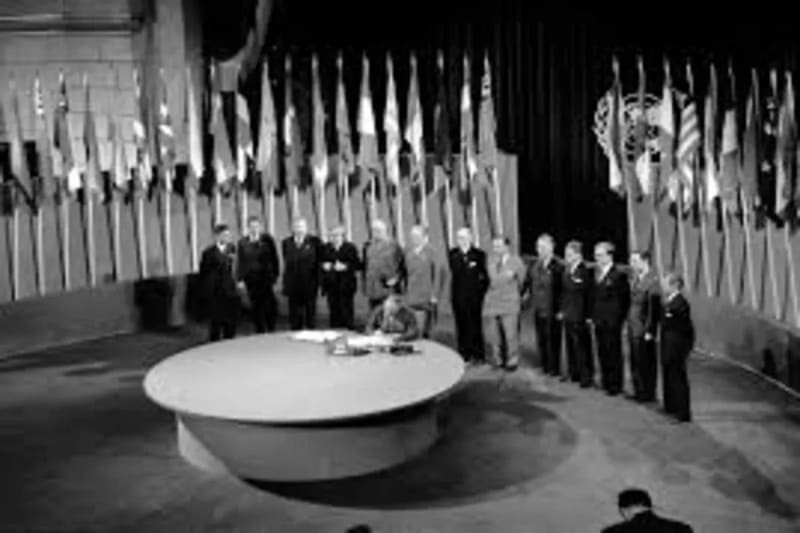
Historical Roots: The Shadow of the Past
This is not the first time the UN Charter has been pushed to its breaking point by U.S. interventionism. The most direct parallel is the 1989 invasion of Panama, where President George H.W. Bush deployed 27,000 troops to seize Manuel Noriega. Like Maduro, Noriega was a leader accused of drug trafficking; his capture proved that military force could successfully deliver a foreign head of state to a U.S. courtroom. However, that operation was widely criticized by the UN General Assembly as a flagrant violation of international law.
The 2003 invasion of Iraq remains the most seismic challenge to the UN framework. The U.S.-led "Coalition of the Willing" toppled Saddam Hussein without a clear UN mandate, a move that then-Secretary-General Kofi Annan explicitly labeled as illegal under the Charter. While Saddam was eventually captured and executed, the intervention destabilized the Middle East for decades. Other instances—from the 2011 intervention in Libya to the 2001 war in Afghanistan—reinforce a troubling pattern: while removing a leader is a tactical possibility, managing the resulting power vacuum often leads to prolonged regional chaos and the erosion of the "rules-based order" established after World War II.
Broader Implications: A Post-Charter World?
The fallout of "Operation Absolute Resolve" is already rippling through the global economy and halls of power. 2025 Nobel Peace Prize laureate María Corina Machado has welcomed the arrest as a victory for democracy, yet the move has alienated regional heavyweights. Colombia’s President Gustavo Petro and Brazil’s President Lula have expressed grave concern that this sets a precedent for "legalized" regime change across Latin America.
Economically, the uncertainty has sent Brent crude prices fluctuating around $60 per barrel. While the eventual return of Venezuelan oil to the global market could lower prices, the immediate risk of civil strife in Caracas keeps markets volatile. Perhaps most critically, this arrest has accelerated the move toward a multi-polar world. As BRICS nations seek to build financial and legal systems independent of Western reach, the UN Charter of 1945 faces its most existential threat.
While a Third World War remains a remote possibility, the world is clearly entering a "New Cold War" where power often substitutes for process. The capture of Nicolás Maduro may have satisfied the demands of a New York indictment, but it has left the international community wondering if the 1945 dream of collective security has finally been replaced by the reality of unilateral force.