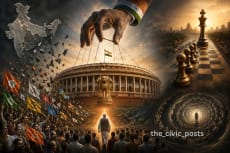
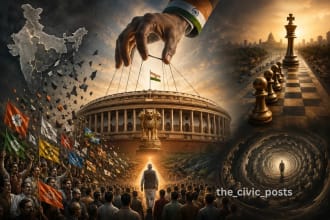
Simultaneous Elections May Overshadow Local Issues and Weaken State Accountability
Kranthi Vegesna - APR 7, 2026

"One Nation, One Election": Benefits, Feasibility, and the Future of Democracy – A Comprehensive Analysis
In recent times, "One Nation, One Election" (Simultaneous Elections) has emerged as one of the most debated topics in the Indian political landscape. As the Union Government, led by the Bharatiya Janata Party, pushes this proposal forward, a massive discourse has ignited regarding its advantages, challenges, and practical feasibility.
The core objective of this concept is to synchronize elections for the Lok Sabha and all State Legislative Assemblies, holding them once every five years. Currently, with various states going to polls at different times, India remains in a state of "perpetual election mode."
Key Advantages of Simultaneous Elections
1. Massive Economic Savings
The financial burden of conducting separate elections is staggering. The Union and State governments spend thousands of crores on logistics, security, polling staff, and campaigning. Synchronizing these elections would drastically reduce expenditure, allowing these diverted funds to be utilized for education, healthcare, and infrastructure.
Total Cost Increase
2014 cost = ₹3,426 crore
2009 cost = ₹1,483 crore
Increase = 3,426 – 1,483 = ₹1,943 crore
Percentage Growth
Growth % = (1,943 ÷ 1,483) × 100
= 131% increase
Per Voter Cost
2009: 1,483 crore ÷ 714 million
= ₹20.7 ≈ ₹21 per voter
2014: 3,426 crore ÷ 834 million
= ₹41.1 ≈ ₹41 per voter
Per Voter Increase
₹41 – ₹21 = ₹20 increase per voter
Growth = (20 ÷ 21) × 100 ≈ 95% rise
Conclusion: Costs nearly doubled per voter, not just overall.
2. Administrative Stability and Governance
The frequent imposition of the Model Code of Conduct (MCC) often brings developmental projects and policy decisions to a standstill. Continuous election cycles lead to "governance paralysis." A single election window ensures five years of uninterrupted governance, enabling the implementation of long-term strategic plans.
3. Shift from Populism to Policy
Under the pressure of constant elections, governments often prioritize "populist" short-term gains over "tough" long-term reforms. Simultaneous elections would allow leadership to focus on sustainable development without the immediate fear of an upcoming ballot.
4. Transparency and Efficiency
Managing election resources-such as Electronic Voting Machines (EVMs) and VVPATs-in a single go would make the electoral machinery more efficient. It could also help in streamlining the monitoring of election malpractice and unaccounted spending.
5. Optimal Use of Security Forces
The deployment of Central Armed Police Forces (CAPF) and state police is a logistical nightmare during frequent elections. Javali (simultaneous) elections would prevent the repeated exhaustion of our security apparatus, ensuring they are available for national security duties.
Critical Questions on Feasibility
1. The Constitutional Hurdle
Implementing this shift requires significant amendments to several Articles of the Constitution. The framework designed by Dr. B.R. Ambedkar emphasizes a federal structure where states enjoy sovereign legislative powers. Altering this balance requires a broad political consensus that is currently elusive.
2. The Tenure Paradox
Currently, State Assemblies have different expiry dates. To align them, the terms of several states would either have to be curtailed or extended. Critics argue that truncating a popularly elected government's term could be viewed as anti-democratic.
3. The Collapse of a Government
What happens if a government falls due to a No-Confidence Motion before the five-year mark? If mid-term polls are required, the "One Nation, One Election" cycle would be broken immediately, bringing the system back to square one.
4. Impact on Federalism
India is a federal union. There is a concern that simultaneous elections might nationalize local issues. Voters might be influenced by national waves, causing regional parties to lose their voice and undermining the diverse representation essential to a federal democracy.
5. Voter Behavior
Data suggests that when local and national elections are held together, voters tend to vote for the same party at both levels. This might result in local grievances being overshadowed by national rhetoric, potentially diluting the accountability of state leaders.
The Global Perspective
Most major democracies do not follow a strictly synchronized schedule. Even in the United States, while federal elections are fixed, various state and local elections occur at different intervals. This staggered approach is often seen as a way to reflect the evolving will of the people rather than a "one-time" snapshot every five years.
Benefits vs. Challenges: A Balanced View
| Feature | The Proponent's View (Benefit) | The Critic's View (Challenge) |
| Economy | Massive savings in public money. | The cost of democracy shouldn't outweigh its essence. |
| Governance | Stability and policy continuity. | Reduced accountability to the people between cycles. |
| Federalism | Unified national direction. | Threat to the survival of regional identities. |
An Ambedkarite Perspective
Dr. B.R. Ambedkar viewed the Constitution not just as a legal document, but as the soul of the nation. For him, democracy was more than a procedure; it was a tool for Equality, Liberty, and Justice. Whether simultaneous elections strengthen these values or weaken the representative nature of our Republic remains a question that only time and practice can answer.
Conclusion
"One Nation, One Election" is a monumental administrative reform. It is neither purely a boon nor a bane; it is a complex transition that demands Constitutional validity, political consensus, and public trust.
In a diverse society like India, every reform must protect democratic values. Rather than focusing solely on the timing of elections, we must prioritize electoral ethics, transparency, and increased citizen participation. Ultimately, a nation is moved forward not just by policies, but by the people’s faith in the Constitution and the integrity of its leaders.