Nagabandham Review & Rating: Mythology Meets Modern Cinema in a Grand Adventure
Editorial desk - JUL 4, 2026
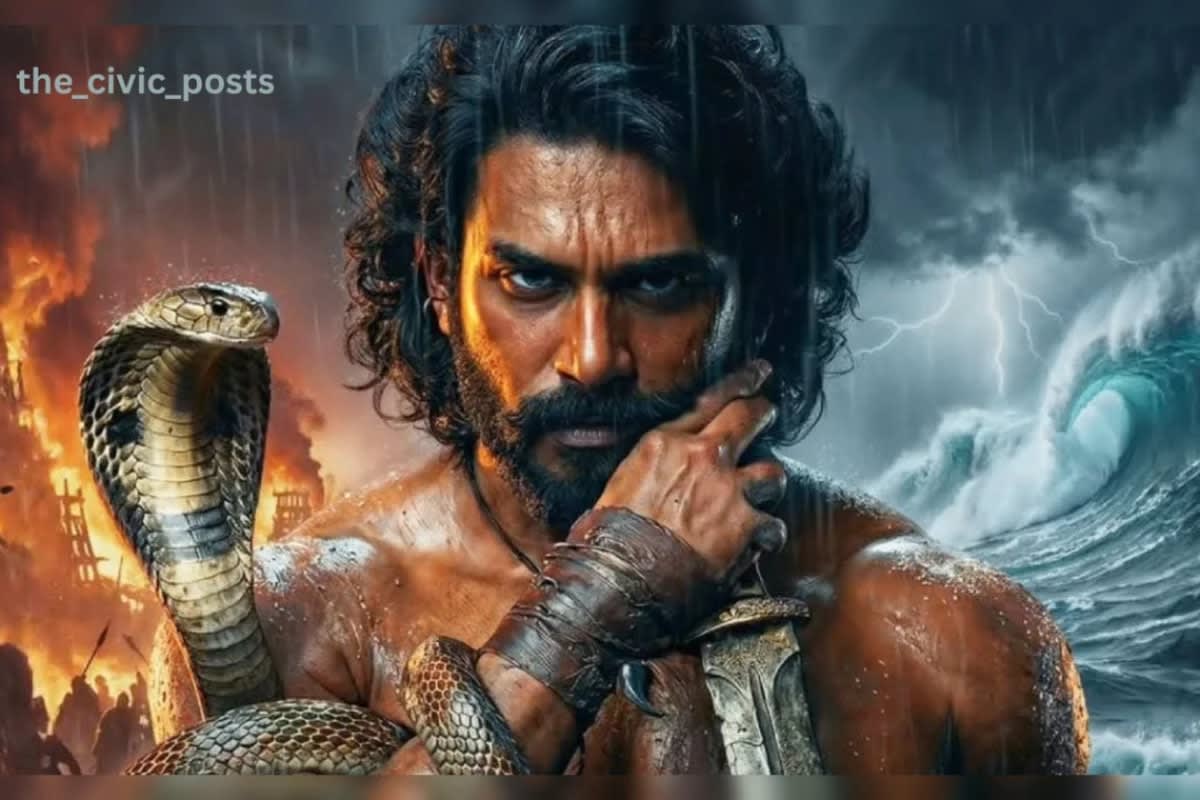
The intersection of history, mythology, and fantasy has always been a sweet spot for Telugu cinema, and producer-turned-director Abhishek Nama’s cinematic venture aims straight for this target. Blending the timeless principles of ancient heritage with a high-stakes adventure, the film attempts to establish a spectacular visual benchmark.
On its opening day, Nagabandham registered a respectable start at the Indian box office, collecting an estimated ₹3.25 crore net and around ₹3.74 crore gross. The Telugu version contributed the majority of the collections, with evening and night shows witnessing better occupancy. The film's weekend performance will largely depend on positive word of mouth and family audience turnout.
Set against an intriguing historical backdrop starting in the 1960s, the story traces an intense, globe-trotting hunt for an ancient mystery known as the Nagabandham. A dedicated team of archaeological researchers, consisting of Prabhakar, Tesla, and Abdali, uncovers a hidden, primitive manuscript tucked away deep within the frozen valleys of the Himalayas.
Realizing the immense value of the secrets locked inside, Prabhakar and Tesla harbor noble intentions, hoping to hand over this invaluable knowledge to the Indian central government to usher in a new era of national prosperity and cultural resurgence.
However, raw greed soon fractures the trio's unity. Driven by selfish ambitions to claim the absolute power of the manuscript for himself, Abdali turns violently on his companions, executing a brutal attack on Tesla’s family to take control of the text.
His triumph is short-lived, as he quickly realizes that unlocking the ultimate secrets of the Nagabandham requires securing the Brahma Kamalam, a sacred, powerful artifact resting safely at the navel of the Lord Sri Ranganatha Swamy deity. Through local connections and manipulation, Abdali targets Rudra, a spirited youth from a nearby hamlet, to help track down the artifact after it mysteriously goes missing from the heavily guarded temple premises.
This involuntary quest completely alters Rudra's life, transforming him from an ordinary village youth into a fiercely protective Naga Sadhu. The narrative then shifts into a high-octane battle of survival and faith, charting how Rudra defends his sacred heritage, faces his family's killers, and thwarts a massive conspiracy designed to undermine ancient cultural roots.
Taking the director's chair for the first time, Abhishek Nama shows incredibly high ambitions. The conceptualization of a mythological mystery set in the mid-20th century is fascinating on paper, and every single frame reflects a strong desire to create a grand technical spectacle. The narrative execution, however, experiences a few bumps along the way.
While the base idea is quite straightforward, the screenplay structure introduces unnecessary complications, which occasionally fractures the story's flow and creates brief moments of confusion for the audience. Furthermore, the director's passion for detailed world-building inadvertently extends the film's total runtime, and the placement of musical numbers occasionally disrupts the narrative momentum, making certain stretches feel overly prolonged.
*Nagabandham* is a visually impressive mythological adventure that blends ancient legends with modern storytelling. The film excels in production values, cinematography, and visual effects, while the performances are sincere. Though the screenplay occasionally loses pace, it remains an engaging watch for audiences who enjoy mythology, mystery, and fantasy-driven cinema. Rating: 3/5.
Despite these pacing issues, the film shines brightest when it handles its core themes. The second half shifts gears effectively, prioritizing themes of righteousness, duty, and cultural preservation. The dramatic interval twist and the heavy mythological subtext provide a strong emotional anchor that helps balance the uneven pacing of the earlier acts. The acting department also holds the narrative together tightly, even when the script slows down.
Following his initial introduction to the industry, Virat Karna takes on a physically and emotionally demanding character in Rudra, carrying a significant portion of the film on his shoulders. His transition from a simple youth into a powerful, imposing warrior monk shows noticeable artistic growth, delivering heavy action sequences and intense dialogue with mature control.
Playing a devoted woman linked closely to the Sri Ranganatha temple, Nabha Natesh delivers a memorable performance that goes beyond standard commercial requirements. Apart from her vibrant screen presence in song sequences, her character serves as a vital bridge for a crucial narrative twist late in the script.
As the primary antagonist, Rishabh Sahni provides a genuinely threatening presence, anchoring the conflict with a classic, ruthless performance that gives the hero a formidable force to reckon with. Industry veterans like Jagapathi Babu offer reliable support, while brief but memorable appearances by the rest of the supporting cast add solid value to the ensemble.
Where the film completely stands out and leaves a lasting impression is its technical execution. The visual design successfully transports the viewer into a highly stylized, otherworldly environment. The visual effects and computer graphics are incredibly ambitious, creating detailed, immersive depictions of ancient temples, sweeping Himalayan landscapes, and rich mythological iconography.
The production design aligns cleanly with these digital graphics, establishing believable worlds from bygone eras. The cinematography captures the vast landscapes and the tight action sequences with a rich, vibrant color palette that emphasizes the sheer grandeur of the settings. While the background score effectively elevates the high-stakes sequences, the songs themselves occasionally hinder the narrative's forward drive.
The action choreography is intensely stylized, though it occasionally leans heavily into graphic violence. Ultimately, while the screenplay choices and runtime prevent it from reaching a perfectly seamless flow, the film's high technical standards and passionate cultural core offer an entertaining, large-scale cinematic experience for folklore and mystery lovers alike.