Why Adult Immunisation Could Be India’s Next Public Health Revolution
Kranthi Shekar - JUL 1, 2026
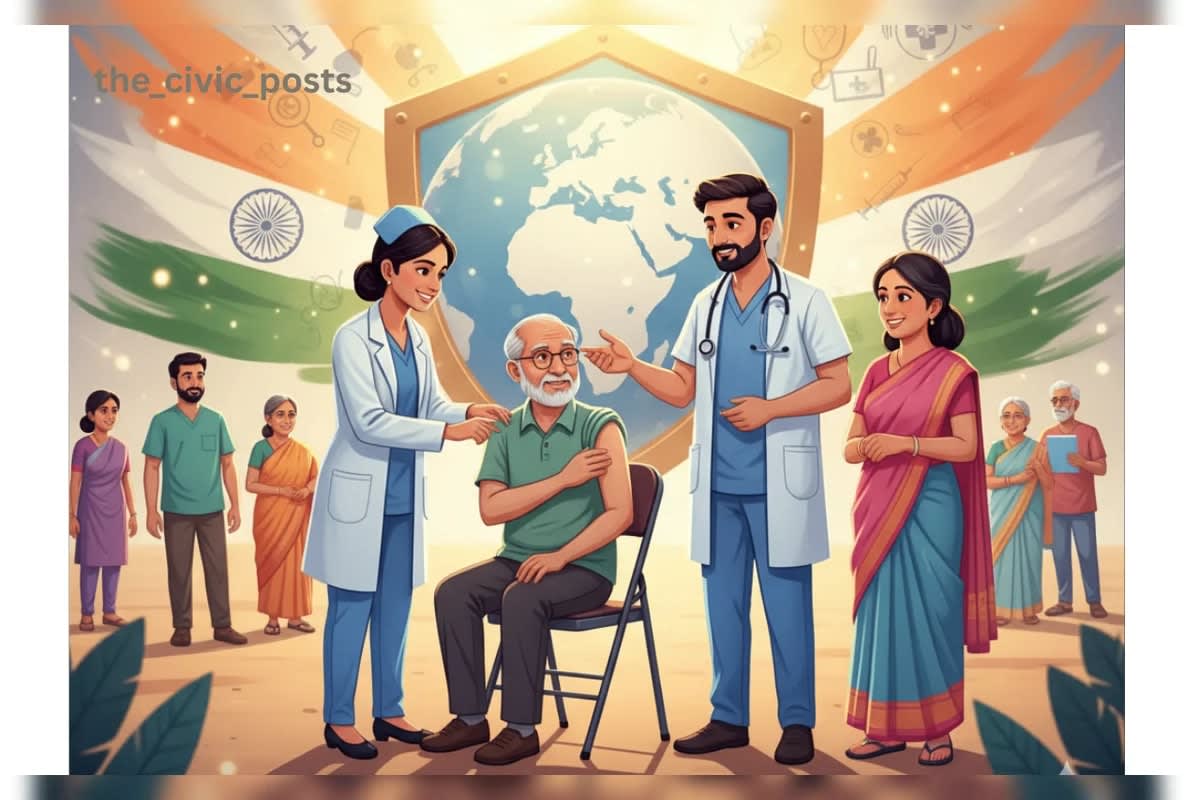
The discourse surrounding public health administration in India has historically focused on maternal and child health, leaving a critical gap in the country's broader preventative healthcare framework: adult immunization. For a long period, policymakers operated with limited empirical insights into how vaccines are utilized beyond pediatric age groups.
This data deficit was partially addressed by the first wave of the Longitudinal Ageing Study in India (LASI), which indicated incredibly low inoculation rates among older demographics-such as a mere 1.5 percent for influenza and 0.6 percent for pneumococcal vaccines. However, that early study only captured basic binary responses without detailing financial costs, dose counts, or delivery points.
The landscape has now fundamentally shifted following the comprehensive release of unit-level data from the 80th Round of the National Sample Survey (NSS), which evaluated health trends extensively across all adult cohorts. This new data serves as a sobering baseline, revealing that structured adult immunization in India is not merely an underperforming initiative, but rather an administrative apparatus that has yet to be formally established.
A close inspection of the statistical findings reveals a stark contrast between India's globally praised pediatric vaccination machinery and its nearly nonexistent adult equivalent. While standard national family health surveys indicate that almost nine out of ten children receive full baseline immunizations, the NSS data shows that overall vaccine coverage stands at an abysmal 1.98 percent for individuals aged 18 and older.
This statistic degrades even further when looking at vulnerable, aging cohorts; coverage plunges to 0.43 percent for individuals aged 50 and above, and reaches a low of 0.40 percent for senior citizens aged 60 and older.
These microscopic percentages demonstrate that outside of childhood frameworks, the vast majority of the Indian population remains entirely unprotected by preventative immunizations against preventable infectious illnesses.
Furthermore, the modest 1.98 percent coverage recorded among the broader adult demographic is highly misleading when viewed without context. Approximately 95 percent of all recorded adult inoculation events within the survey represent tetanus-diphtheria boosters administered to pregnant women through established government antenatal networks. Outside of this specific maternal healthcare infrastructure and the unique, state-led mobilization witnessed during the historical distribution of COVID-19 booster doses, the public healthcare architecture rarely dispenses adult vaccines.
Crucial life-saving inoculations targeting conditions like influenza, pneumococcal diseases, and herpes zoster are managed almost exclusively through private medical providers at market prices. Consequently, access to adult preventative care in India functions essentially as a commercial luxury, structurally separating life-saving interventions from the citizens who need them most based entirely on personal purchasing power.
This reliance on private marketplace delivery structures naturally skews vaccine distribution across gender, geographic, and socio-economic lines. On the surface, the data indicates a counterintuitive gender advantage, showing female vaccine coverage at 3.57 percent compared to a meager 0.40 percent for men. However, this gap is entirely a byproduct of the aforementioned antenatal tetanus-diphtheria programs targeting reproductive-age women.
Once women age out of their reproductive years, the public healthcare system effectively stops reaching them. Among senior citizens aged 60 and older, female vaccine coverage drops to 0.26 percent, with rural senior women recording the absolute lowest coverage in the entire dataset at 0.12 percent.
This pattern is mirrored across social groups; Scheduled Tribe populations show higher initial coverage due to targeted maternal health interventions in tribal areas, but their coverage collapses to a negligible 0.10 percent in the 60 and older age bracket, while wealthier segments of the general category retain a relative advantage due to their ability to purchase private-market vaccines.
Socio-economic segmentation using monthly per capita consumption expenditures further highlights these systemic disparities. While basic adult coverage remains uniformly low across all wealth increments, a distinct rural-urban divide emerges among older cohorts. Individuals aged 50 and older living in urban zones display twice the immunization rates of their rural counterparts.
This inequality highlights a structural deficit in vaccine logistics, refrigeration infrastructure, and specialized private healthcare clinics outside of major metropolitan areas, leaving rural aging populations entirely isolated from preventative medical options. Interestingly, the survey also uncovers unique behavioral anomalies that defy purely economic explanations. Vaccine coverage among older Christian demographics stands at nearly five to six times the national average for other major religious groups, displaying a trend where rural communities actually outperform urban ones.
Conversely, Jainism-statistically the most affluent community represented in the sample-records a miniscule 0.05 percent coverage rate among individuals over 50. This variation proves that vaccine access is not merely a challenge dictated by poverty or supply chains, but is also deeply influenced by distinct communal behaviors, institutional trust, and varying degrees of vaccine hesitancy.
The insights provided by this data come at a crucial moment in India's demographic evolution. As the nation experiences rapid economic growth, it is also transitioning into one of the world's fastest-aging democratic societies.
The idealized economic dividend expected from a longer-living population cannot be realized if the elderly demographic faces a high burden of preventable chronic infections and associated hospitalization expenses. The fact that the state actively integrated detailed adult immunization metrics into a massive national survey instrument confirms that public health planners are recognizing this emerging epidemiological challenge.
Given that India possesses some of the most robust vaccine manufacturing capabilities globally, the barrier to implementation is not production capacity, but the absence of a formalized, publicly funded national adult immunization policy. Transforming these statistical insights into a structured, equitable public health program will be the definitive next step in safeguarding the physical and economic well-being of the nation's aging workforce.