Shreyas Iyer’s Captaincy Under Pressure: India’s T20 Failure Reveals Bigger Questions Beyond One Defeat
Editorial desk - JUL 8, 2026

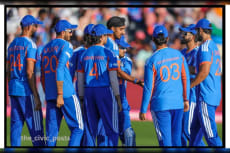
Cricket has always been a game where leadership is judged by results, but true leadership is tested when the results do not go in favour of the team. For Shreyas Iyer, the beginning of his journey as India’s T20 captain has brought a difficult challenge. A crushing defeat against England has not only affected India’s position in the series but has also opened a wider discussion about leadership, strategy, team balance, and the demands of modern T20 cricket.
India’s heavy loss was a reminder that even teams with extraordinary talent can struggle when execution fails at crucial moments. The defeat exposed weaknesses in batting approach, decision-making under pressure, and the ability to recover after early setbacks. For Iyer, who stepped into a major leadership role, the match became a significant learning experience.
In international cricket, not every defeat carries the same impact. Some losses are close contests decided by a few moments, while others reveal deeper problems within a team’s approach.
India’s defeat against England belonged to the second category. England controlled the match almost completely, dominating with both bat and ball. After setting a challenging target, England’s bowlers created constant pressure and prevented India from building any meaningful partnership during the chase.
The biggest concern was not just the final margin of defeat. It was the way India struggled to respond when the situation became difficult. T20 cricket rewards teams that can adapt quickly, but India found themselves unable to change the momentum once England gained control.
Leading India is one of the toughest assignments in world cricket. The expectations are enormous, and every decision is examined closely by fans, experts, and former players.
For Shreyas Iyer, captaincy brings additional responsibility because he is expected to manage a talented squad while also proving his own leadership credentials. A captain must handle tactical decisions, player confidence, match situations, and external pressure simultaneously.
The early stages of captaincy are rarely easy. A leader needs time to understand the team’s strengths, develop combinations, and create a clear playing philosophy.
The current challenge for Iyer is not only about winning matches. It is about showing that he can build a team capable of handling pressure situations consistently.
T20 cricket is often described as a format of momentum. A few excellent overs can completely change the direction of a match, but a few poor overs can also put a team in an almost impossible position.
India’s batting collapse highlighted this reality. Once wickets started falling, the team struggled to rebuild the innings or create pressure on the opposition.
Successful T20 teams understand that aggression must be supported by planning. Attacking cricket does not mean taking unnecessary risks on every delivery. It means knowing when to attack, when to rotate the strike, and when to build partnerships.
Finding this balance will be one of India’s biggest priorities moving forward.
A captain’s influence is often visible in difficult moments. Field placements, bowling changes, and decisions regarding match-ups can decide the outcome of a T20 game.
While no captain gets every decision right, strong leaders learn from situations and improve their understanding of the game.
For Iyer, this period will be important in developing his leadership identity. He will need to understand how different players perform under pressure and how to use their abilities effectively.
Captaincy is not only about making bold decisions. Sometimes it is about patience, trust, and allowing players to perform their roles without unnecessary pressure.
One of the key factors behind successful T20 teams is clarity. Every player needs to know their exact responsibility.
A batter who knows their role can approach an innings with confidence. A bowler who understands their assignment can execute plans more effectively.
Uncertainty can create hesitation, and hesitation often leads to mistakes in the shortest format.
India has no shortage of talented players, but converting individual ability into a successful team performance requires proper role management.
The captain and coaching staff must ensure that every player understands what is expected from them.
Despite the disappointing result, difficult matches often provide opportunities for emerging players. International cricket is where young cricketers learn the realities of pressure, expectations, and competition.
Players who perform during challenging situations often become important assets for the future.
India’s strength has always been its ability to produce talented cricketers. The challenge is creating an environment where young players can develop while still maintaining competitive results.
A successful team requires both experience and fresh energy.
Every captain faces criticism. In Indian cricket, the reaction to defeats is often intense because expectations are extremely high.
However, criticism can also become a source of improvement. Great leaders learn to separate emotional reactions from constructive feedback.
For Iyer, the important factor will be how he responds after this setback. A captain’s reputation is not built only during winning phases. It is shaped by the ability to handle difficult situations and guide the team forward.
The strongest leaders are those who accept challenges and continue searching for solutions.
The defeat against England should serve as a warning but not as a reason for panic. One result does not decide the future of a team or a captain.
India still has a strong talent pool and the resources required to compete at the highest level. However, improvements are necessary in areas such as batting consistency, pressure management, and tactical planning.
The team must analyse mistakes honestly and make adjustments before the next challenge arrives.
Modern cricket moves quickly, and successful teams are those that learn faster than their opponents.
Every captain has a beginning filled with challenges. Some leaders start with immediate success, while others grow through difficult experiences.
Shreyas Iyer’s current phase may become an important chapter in his cricketing journey. The lessons learned from defeats can shape decision-making abilities and leadership maturity.
The real measure of a captain is not how the team performs only during comfortable situations. It is how the captain responds when the team is struggling.
Shreyas Iyer’s early captaincy period has faced a major test after India’s disappointing T20 defeat against England. The match exposed areas that require improvement and created questions about strategy and execution.
But every setback also provides an opportunity. The ability to analyse mistakes, rebuild confidence, and create a stronger approach will define the next phase of India’s journey.
Captaincy is a marathon, not a single match. The defeat may be a difficult moment, but the response to that moment will reveal the true leadership qualities of Shreyas Iyer.