The Future of the Congress Party: Challenges, Opportunities, and the Road Ahead
Kranthi Vegesna - MAY 16, 2026

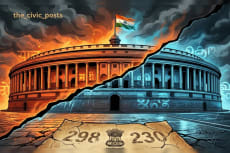
For decades, the Indian National Congress stood as the dominant force in Indian politics. As the party that led India’s freedom struggle and governed the nation for much of its post-independence history, Congress occupies a unique place in the country’s political landscape. However, the political environment has changed dramatically in recent years. The rise of the Bharatiya Janata Party (BJP), the growing influence of regional parties, and internal organizational issues have pushed Congress into one of the most challenging phases of its existence.
This raises an important question: What should the future of the Congress Party look like? What reforms are necessary, and what strategies can help the party regain relevance in national politics?
Where Does Congress Stand Today?
The Congress vote base has not disappeared entirely, but it has become fragmented.
In northern India, the BJP continues to maintain strong dominance. In southern states, however, Congress still retains pockets of influence, particularly in Karnataka, Telangana, and Kerala.
In many states, Congress has shifted from being the “principal political force” to becoming a coalition partner. Out of the 543 Lok Sabha constituencies, there are relatively few seats where Congress directly faces the BJP in a straight contest. In most regions, it must either compete alongside or against regional parties.
Major Challenges Facing Congress
1. Internal Conflicts
Factional politics has weakened the party considerably. Delays in leadership decisions, especially regarding chief ministerial candidates, and rivalries among senior leaders continue to damage the party’s image.
2. Lack of Clear Leadership
At the national level, the party struggles with leadership clarity. Public opinion regarding Rahul Gandhi’s leadership remains divided, creating uncertainty among both voters and party workers.
3. Weak Grassroots Cadre
Congress has seen a significant decline in its organizational strength at the village and booth levels. Unlike the BJP, the party lacks a disciplined and highly active cadre structure.
4. Strained Relations with Regional Parties
Seat-sharing arrangements remain a constant source of friction. In several states, Congress and regional parties are local rivals, making vote transfers difficult even within alliances.
5. Failure to Attract New Voters
The party has struggled to connect with younger voters. Its digital outreach and social media presence lag behind its competitors, particularly the BJP.
Opportunities Still Exist
Despite these challenges, Congress still has meaningful opportunities for revival.
Anti-Incumbency
Whenever public dissatisfaction against ruling governments grows, Congress has the potential to emerge as a viable alternative.
Alliance Politics
Strategic cooperation with regional parties such as the Trinamool Congress, Aam Aadmi Party, and Samajwadi Party could strengthen the opposition against the BJP in several states.
Social Justice Agenda
Dalits, minorities, and economically weaker sections have traditionally formed an important support base for Congress. Rebuilding trust with these communities could help revive the party’s electoral prospects.
Strategies for Congress Revival
1. Declare Leadership Early
The party should announce chief ministerial candidates before elections wherever possible. This can reduce internal power struggles and improve public confidence.
2. Strengthen Organizational Discipline
Leaders openly working against party decisions should face strict disciplinary action. A balance between internal democracy and organizational discipline is essential.
3. Build Smarter Alliances
A flexible alliance formula could help both Congress and regional parties. One possible model could involve regional parties taking the lead in assembly elections, while Congress focuses more heavily on Lok Sabha contests.
Such arrangements may:
Improve vote transfer efficiency
Reduce direct competition among allies
Strengthen anti-BJP coordination
However, alliance structures must be adapted state by state rather than imposed uniformly.
4. Rebuild Grassroots Networks
Congress must transform from being merely an “election-time party” into a continuous public service organization.
This could include:
Village-level help centers
Assistance with welfare schemes
Support for healthcare, education, and ration access
Such initiatives can rebuild emotional and political connections with ordinary voters.
5. Focus on Youth
The party needs a stronger agenda centered around employment, education, startups, and innovation. Effective use of digital platforms and youth engagement campaigns is critical.
6. Improve Digital Communication
Congress must strengthen its social media ecosystem and counter misinformation more effectively. Communication in regional languages should become a major priority.
7. Reward Performance-Based Leadership
Tickets and organizational responsibilities should go to leaders who demonstrate consistent grassroots work rather than those relying solely on lobbying and internal influence.
8. Present a Clear Governance Agenda
The party must move beyond being seen as merely “anti-BJP.” A clear developmental vision and practical governance roadmap are essential.
Strengthening the INDIA Alliance
For the INDIA alliance to become effective, greater coordination is necessary.
Key steps include:
Organizing joint public meetings
Improving coordination between alliance leaders
Establishing formal coordination committees
Leaders such as Mamata Banerjee, Arvind Kejriwal, and Akhilesh Yadav could play important roles in shaping opposition unity.
Structural Reforms Within Congress
Reduce High-Command Culture
State leaders should be given greater autonomy in decision-making.
Strengthen State Units
Each state requires its own tailored political strategy rather than relying solely on centralized planning.
Leadership Stability
Frequent changes in chief ministerial leadership weaken governance and organizational stability. Leadership continuity is important for long-term credibility.
A Long-Term Vision
Rebuilding Ideological Clarity
Congress must clearly articulate its liberal, secular, and inclusive political vision in contemporary terms.
Nurturing New Leadership
Young leaders should be promoted systematically to ensure generational renewal within the party.
Maintaining Constant Public Engagement
Political engagement should not be limited to election seasons. Sustained interaction with citizens is necessary to rebuild trust.
It would be an exaggeration to say that the Congress Party has no future. However, continuing with outdated political methods could deepen its decline.
The keys to revival are clear:
Organizational discipline
Leadership clarity
Constructive alliances with regional parties
Grassroots rebuilding
A forward-looking governance agenda
Ultimately, if Congress sets aside political arrogance and reconnects with the people at the grassroots level, it still has the potential to remain a major force in Indian politics.