The Governor System in India: Constitutional Role, Political Misuse, and the Need for Reform
Kranthi Vegesna - MAY 25, 2026
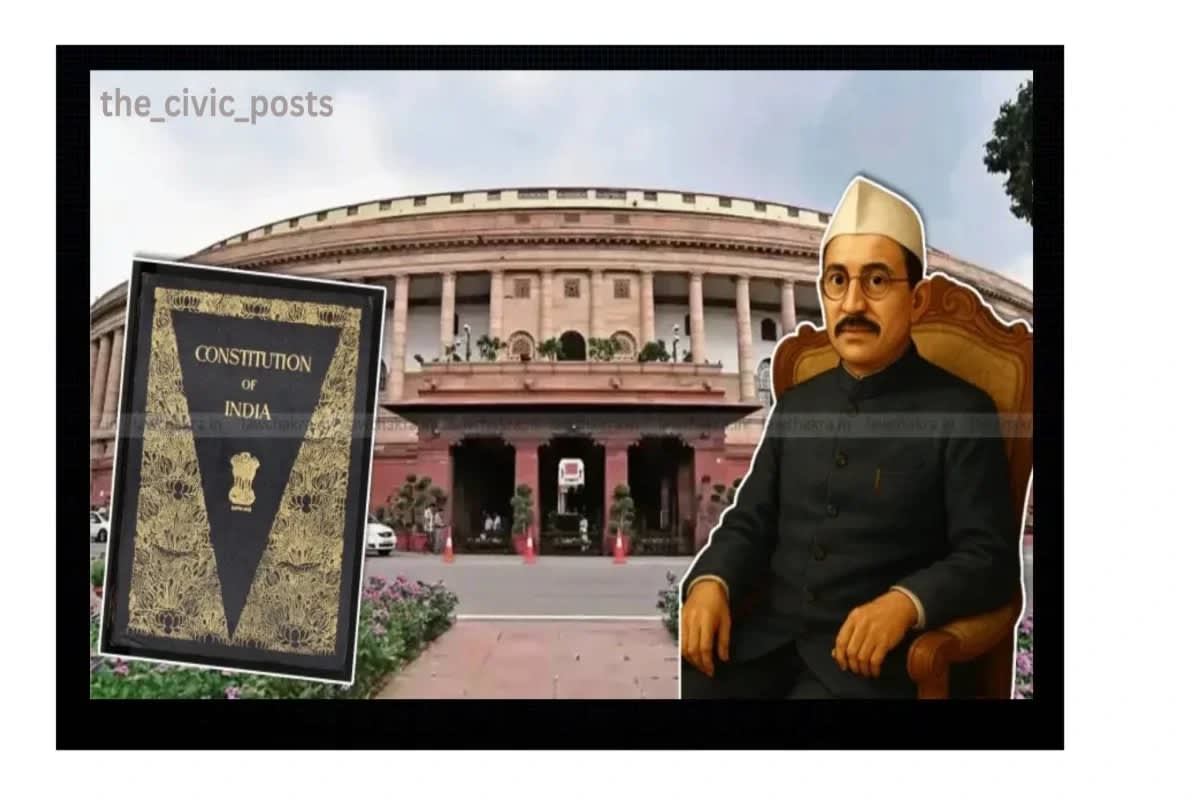
Under Article 153 of the Constitution of India, every state shall have a Governor appointed by the President of India. The Governor is envisioned as the constitutional head of the state and is expected to function within the framework of parliamentary democracy.
The Governor’s key responsibilities include:
Ensuring that the state government functions within constitutional limits
Summoning, proroguing, and dissolving the State Assembly
Granting assent to bills or reserving them for the President’s consideration
Reporting constitutional breakdowns that may warrant the imposition of Article 356 (President’s Rule)
However, these powers are largely meant to be exercised on the “aid and advice” of the elected Council of Ministers. It is precisely at this intersection that constitutional friction and political controversies often begin.
---
Historical Misuse of the Governor’s Office
Over the decades, the office of the Governor has repeatedly come under criticism for being used as a political instrument by the Union government.
1. Dismissal of the Kerala Communist Government (1959)
The government led by E. M. S. Namboodiripad was the first democratically elected Communist government in India. Yet, amid the “Liberation Struggle” protests, the Union government led by Jawaharlal Nehru invoked Article 356 and dismissed the government.
This episode is widely regarded as the first major misuse of Article 356 for political purposes.
2. Jammu & Kashmir Crisis (1984)
In 1984, the government headed by Farooq Abdullah was dismissed by Governor Jagmohan without allowing a floor test to prove majority support.
Instead, Ghulam Mohammad Shah was installed as Chief Minister. The move attracted severe criticism against the Union government led by Indira Gandhi.
3. West Bengal (1967)
The United Front government led by Ajoy Mukherjee was abruptly dismissed by the Governor without being given sufficient opportunity to prove its majority on the Assembly floor.
The action was criticized as being contrary to constitutional morality and democratic norms.
4. Dismissal of Nine State Governments in 1980
After returning to power in 1980, the government led by Indira Gandhi dismissed nine opposition-ruled state governments in a single day.
The move was widely condemned as an act of political retaliation and central overreach.
5. The S. R. Bommai Case (1989–1994)
The dismissal of the government led by S. R. Bommai eventually resulted in one of the most significant constitutional judgments in Indian history by the Supreme Court of India.
Key Principles Established by the Judgment
Majority must be tested on the floor of the Assembly
Governments cannot be dismissed solely on the Governor’s subjective opinion
Judicial review of Article 356 proclamations is permissible
The Bommai judgment became a landmark constitutional safeguard against arbitrary misuse of gubernatorial powers.
---
The Contemporary Debate Around Governors
In recent years, the conduct of Governors has once again become a major political and constitutional issue, especially in states ruled by opposition parties.
Tamil Nadu and Delays in Government Formation
Political tensions emerged in Tamil Nadu when delays by the Governor during government formation raised questions about constitutional propriety. Despite clear majority support, procedural delays over letters of support and consultations triggered allegations of political interference.
Delays in Assent to Bills
Governors withholding or delaying assent to bills has become another major flashpoint.
Notable examples include:
Tamil Nadu - NEET exemption bill
Telangana - Delay in clearing several key bills
Punjab - Disputes over budget sessions
During hearings on such matters, the Supreme Court of India observed that Governors are not elected representatives of the people and must function within constitutional boundaries.
---
Structural Problems Within the Governor System
Several institutional weaknesses contribute to recurring controversies.
1. Political Appointments
Governors are appointed by the Union government, and many appointees are former politicians or individuals closely aligned with ruling parties at the Centre.
2. Ambiguity in Discretionary Powers
The Constitution provides Governors with certain “discretionary powers,” but lacks clear operational guidelines regarding their limits.
3. Lack of Accountability
There is no direct accountability mechanism to examine or penalize questionable actions by Governors.
---
Reforms That India Needs
If Indian democracy is to be strengthened, meaningful reforms to the Governor system are essential.
1. Time Limit for Assent to Bills
Article 200 should be amended to mandate Governors to take decisions on bills within a fixed timeframe—preferably 30 to 60 days.
2. Transparent Appointment Process
Governors should be appointed through a broad-based constitutional committee comprising:
The Prime Minister
The Leader of the Opposition
The Chief Justice of India
The concerned Chief Minister
3. Implementation of Sarkaria and Punchhi Commission Recommendations
The recommendations of the Sarkaria Commission and the Punchhi Commission should be implemented in full.
These include:
Appointing politically neutral individuals as Governors
Avoiding active politicians or ruling party leaders in such appointments
4. Respecting the Advice of the Council of Ministers
In a parliamentary democracy, Governors are expected to function primarily on the advice of the elected Council of Ministers, not as independent political authorities.
5. Reforming the Removal Process
At present, the Union government can effectively remove Governors at will. A more transparent and constitutionally balanced removal mechanism is necessary.
The Governor system remains an important constitutional institution within India’s federal structure. Yet history demonstrates that it has often been used for political convenience rather than constitutional neutrality.
From Kerala to Karnataka, and from Jammu & Kashmir to Andhra Pradesh, repeated controversies have highlighted the tensions between elected state governments and centrally appointed Governors.
The intervention of the Supreme Court of India-particularly through the landmark Bommai judgment-has imposed some constitutional restraint. Nevertheless, disputes surrounding Governors continue to persist.
India now faces an important democratic question: should unelected constitutional offices overshadow the mandate of elected governments?
Strengthening transparency, accountability, and constitutional morality within the Governor system is no longer optional-it is essential for preserving the spirit of Indian federalism and democracy.