Kaleshwaram Project Sparks Fresh Political Battle in Telangana Amid Irrigation Concerns
Alekhya Kota - JUL 6, 2026
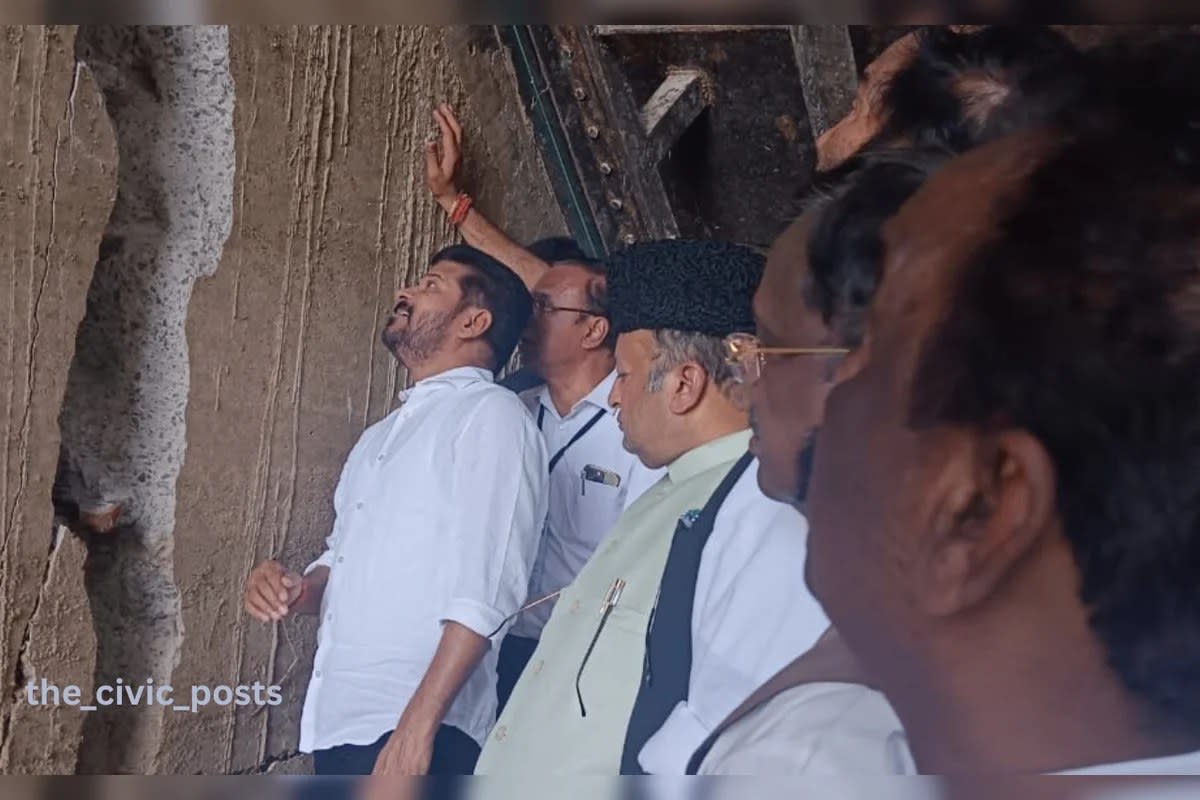
The Kaleshwaram Lift Irrigation Scheme (KLIS), once celebrated as one of India's most ambitious water infrastructure projects, has once again become the center of political debate in Telangana. The latest controversy has emerged after leaders of the ruling Congress government and the opposition Bharat Rashtra Samithi (BRS) exchanged allegations over the operation of the irrigation project and its impact on farmers.
The political confrontation intensified when BRS Working President K.T. Rama Rao (KTR) demanded that the state government immediately begin lifting Godavari River water through the Kannepalli Pump House. According to the opposition, delaying irrigation activities could leave thousands of farmers vulnerable during the agricultural season. KTR argued that timely water supply is crucial for protecting standing crops and ensuring that farmers do not face drought-like conditions.
During his visit to inspect the Kannepalli Pump House, KTR's convoy was reportedly stopped by the police, leading to further political tension. He questioned the government's decision to prevent his visit and accused the administration of attempting to silence opposition leaders. The incident quickly became a major political issue, with the BRS alleging that democratic rights were being curtailed.
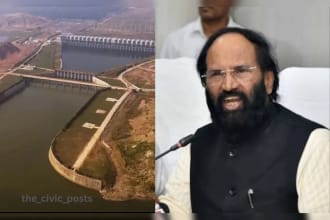
On the other hand, the Congress government rejected the opposition's allegations and defended its cautious approach toward operating the project. State Irrigation Minister Uttam Kumar Reddy stated that the government would prioritize public safety over political pressure. According to the government, the Kaleshwaram project's barrages, including Medigadda, Annaram, and Sundilla, require technical evaluation and safety clearances before large-scale water lifting operations can resume. Officials emphasized that any decision regarding the project must be based on engineering recommendations rather than political demands.
The Kaleshwaram Lift Irrigation Scheme was designed to utilize the waters of the Godavari River by lifting water through a series of pumping stations and reservoirs to irrigate millions of acres across Telangana. The project was promoted by the previous BRS government as a transformative initiative capable of improving agricultural productivity, drinking water supply, and industrial development.
However, the project has faced increasing scrutiny over the past few years. Structural issues at the Medigadda barrage, where several piers reportedly sank, raised concerns about the project's design, construction quality, and long-term sustainability. These developments triggered technical investigations by multiple agencies, including the National Dam Safety Authority (NDSA), which recommended detailed safety assessments before the infrastructure could be fully utilized again.
The Congress government has consistently argued that repairing and strengthening the project should take precedence over immediate political demands. According to officials, operating the barrages without proper rehabilitation could create additional engineering risks. They maintain that expert advice must guide every operational decision to ensure the safety of both the infrastructure and downstream communities.
Meanwhile, the opposition maintains that the government's delays are affecting farmers. BRS leaders argue that every day without irrigation reduces agricultural productivity and increases uncertainty for cultivators. They claim that the state has adequate water resources and that the existing pumping infrastructure should be utilized after necessary operational checks instead of remaining idle.
The disagreement highlights a broader political contest over the legacy of the Kaleshwaram project. For the BRS, the irrigation scheme represents one of its flagship achievements during its tenure in power. Party leaders continue to describe the project as a major contributor to agricultural expansion and rural development in Telangana. They accuse the Congress government of attempting to discredit the project for political reasons rather than focusing on restoring its functionality.
The Congress, however, presents a different narrative. It argues that the project suffered from planning deficiencies, cost overruns, and inadequate technical oversight during its construction. Government representatives insist that their objective is not to abandon the project but to restore it responsibly after addressing all structural concerns identified by expert agencies.
Beyond the political rhetoric, the issue has significant implications for Telangana's farmers. Irrigation remains one of the most important factors influencing agricultural output in the state. Large sections of Telangana depend on reliable access to irrigation water for cultivating crops such as paddy, cotton, maize, and pulses. Any disruption in water supply can directly affect farm incomes, rural employment, and food production.
Experts note that balancing infrastructure safety with agricultural needs is a complex challenge. While immediate water release may benefit farmers in the short term, ignoring technical warnings could create larger risks in the future. Conversely, prolonged delays in restoring irrigation operations could reduce the confidence of farming communities that rely heavily on these projects.
The ongoing political confrontation also reflects how infrastructure projects often become symbols of governance. Rather than remaining purely technical initiatives, large public investments frequently evolve into political issues, with competing parties highlighting either their developmental achievements or alleged administrative failures.
As Telangana continues to expand its irrigation network, maintaining transparency, engineering accountability, and public confidence will be essential. Independent technical evaluations, timely repairs, and open communication with farmers can help reduce uncertainty surrounding the project. Experts believe that long-term solutions require cooperation among engineers, policymakers, and local communities rather than prolonged political confrontation.
Looking ahead, the future of the Kaleshwaram Lift Irrigation Scheme will depend on the successful completion of rehabilitation work and the receipt of safety approvals from the relevant authorities. Once these processes are completed, the project could continue serving its intended purpose of supporting agriculture and water security across Telangana. Until then, political debates are likely to continue as both the ruling government and the opposition seek to shape public opinion on one of the state's most significant infrastructure projects.
The latest developments demonstrate that the Kaleshwaram project remains far more than an engineering initiative. It has become a symbol of political accountability, infrastructure management, and agricultural policy in Telangana. Ultimately, the state's farmers stand to benefit most if technical expertise, transparent governance, and timely decision-making take precedence over partisan disagreements.